Which documents need a translation for TPS?
For Temporary Protected Status (TPS), USCIS asks for a full English translation of every document with information in a foreign language, with the translator’s signed certification. The documents that usually need translating prove identity and nationality: a passport, a birth certificate, a national ID card, a baptismal certificate, plus any court records from abroad. We translate Spanish, Ukrainian, Russian, Romanian and Bulgarian documents: $25 for the first page and $20 for each additional one. For 1–4 documents, the translation is ready within 24 hours after payment.
What USCIS says about translations for TPS
The Form I-821 instructions (opens in a new tab) (edition 01/20/25, p. 3) require a full English translation for any document with information in a foreign language. The translator signs a certification that it is complete and accurate and that they are competent to translate from that language into English, with their signature, printed name, the date and contact information. The checklist at the end of the instructions asks the same: did you include full, certified English translations (p. 15 (opens in a new tab)).
The list of designated countries changes. When we checked in October 2026, the USCIS TPS page (opens in a new tab) (last updated October 20, 2026) listed El Salvador, Lebanon, Sudan and Ukraine. Each country has its own page with dates and filing details.
Identity and nationality
A first-time application proves who you are and that you are a national of the designated country. The instructions name a passport, a birth certificate with a photo ID, or a national identity document with your photo or fingerprint (pp. 9–10 (opens in a new tab)). The TPS page (opens in a new tab) adds documents issued by your country’s embassy or consulate in the United States.
Without those, the TPS page lists secondary evidence:
- a naturalization certificate;
- a baptismal certificate that shows your or a parent’s nationality;
- school or medical records that support your nationality;
- affidavits from friends or relatives who know the date and place of your birth and your parents’ nationality.
How we translate the most common one: birth certificate translation.
When a document can’t be obtained
You may file an affidavit showing your efforts to get the document, why the consular process isn’t available to you, and that you are a national of the designated country. USCIS may also ask for a statement from the issuing authority that the document isn’t available (p. 12 (opens in a new tab)). Such statements from registries and archives are translated like any certificate.
Entry, residence and court records
Date of entry is shown with a passport or an I-94; residence, mostly with US records such as pay stubs, rent receipts and school records (p. 10 (opens in a new tab)). For any arrest or charge, the instructions ask for certified copies of arrest reports, court dispositions and sentencing documents, even if the record was sealed or expunged, and information on crimes outside the United States (pp. 11–12 (opens in a new tab)).
What we translate
Each document in full, with seals, stamps and handwritten notes, and the signed certification. Our Spanish documents are translated and certified by a native Spanish speaker; Ukrainian, Romanian and Bulgarian documents by a native speaker of that language; Russian documents by our Russian translator. More on the certification: what it says.
What to file in your case is for you or your attorney to decide.
Sample translations
8 samplesEach sample has the original, the translation and the signed certificate. Personal details are blurred.
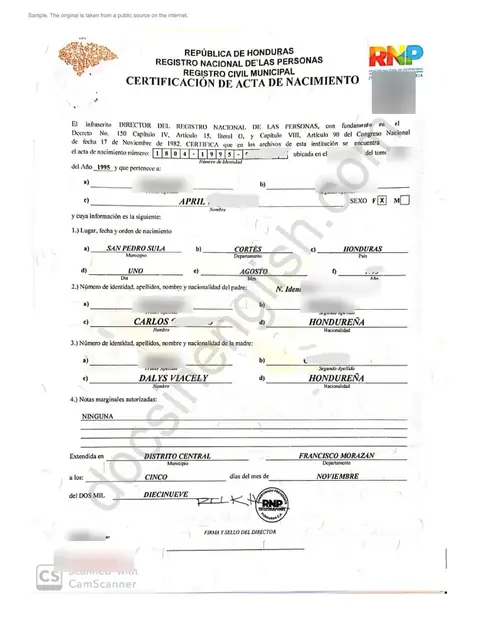 Honduran birth certificate (2019)Open, 3 pages
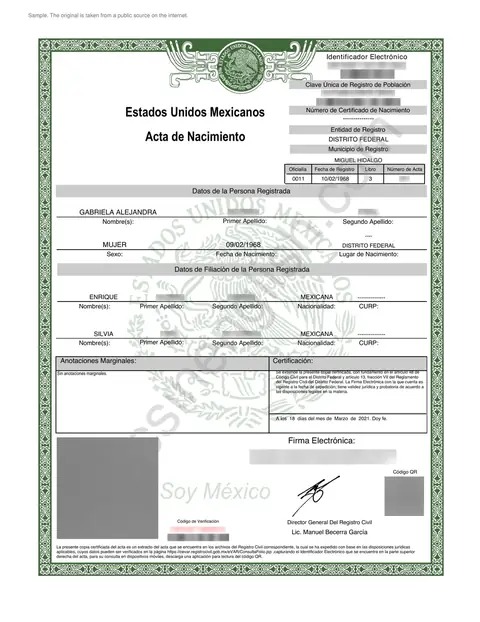 Mexican birth certificateOpen, 3 pages
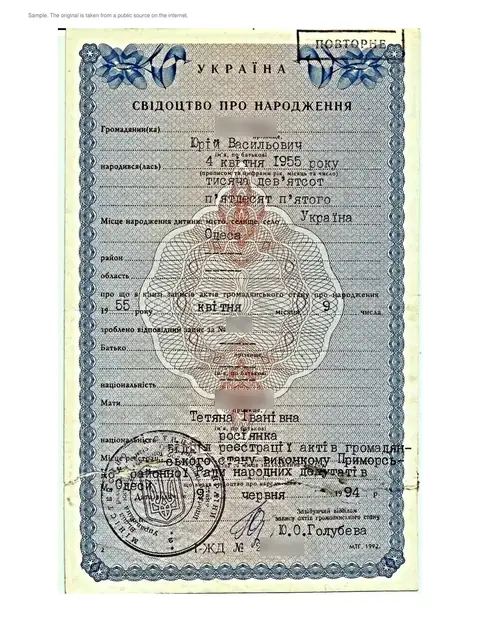 Ukrainian birth certificateOpen, 3 pages
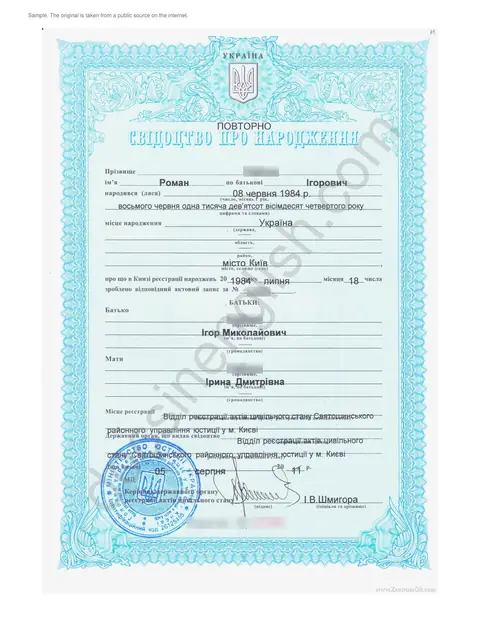 Ukrainian birth certificate (duplicate, 2011)Open, 3 pages
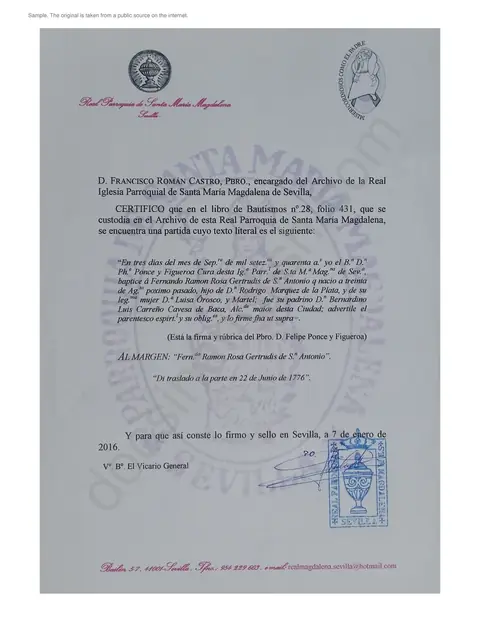 Spanish baptism certificate (entry of 1740)Open, 2 pages
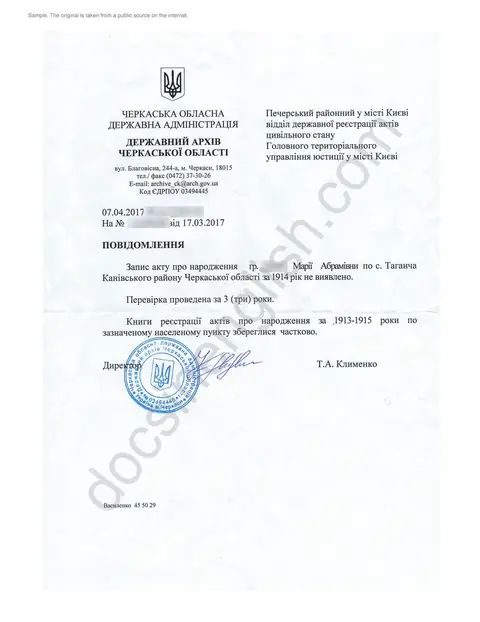 Ukrainian archive notice: no birth record foundOpen, 2 pages
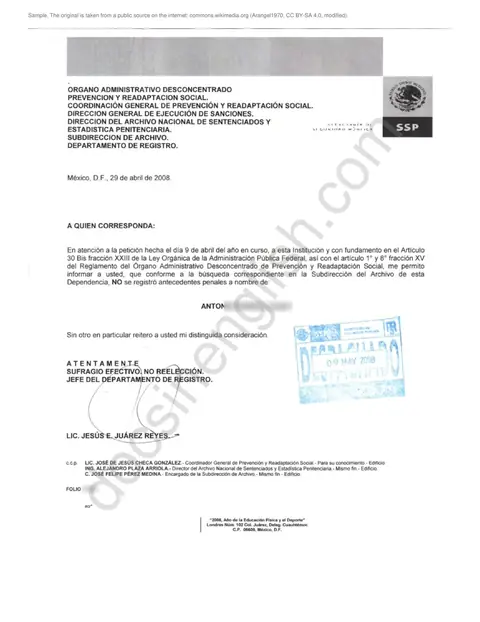 Mexican certificate of no criminal recordOpen, 3 pages
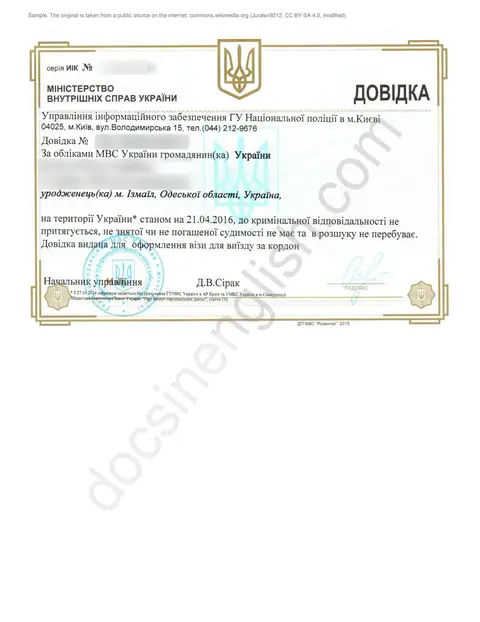 Ukrainian police clearance certificateOpen, 3 pages
Questions
I’m re-registering for TPS. Do I need new translations?
The I-821 instructions say a re-registration doesn’t need copies of documents, though USCIS may ask for some. If it asks for a foreign-language document, it needs a full English translation.
The registry says my birth record can’t be found. What do I translate?
The official statement that the record isn’t available, in full. The I-821 instructions say USCIS may ask for such a statement from the issuing authority.
How much does it cost?
$25 for the first page and $20 for each additional page in the same order. A birth certificate, a national ID card and a baptismal certificate, one page each, are $65.
Do I need a notary or an apostille?
The I-821 instructions ask for the translator’s signed certification, not a notary or an apostille. The certification is included.
How long does it take?
1–4 documents: within 24 hours after payment; faster, within 12 hours (+$15 a page) or 3 hours (+$30 a page, paid between 8 am and 6 pm Pacific time). For 5 or more, we give you the date with the quote.
How we do it
- Full translation
every stamp, signature and handwritten line
- Signed certificate
with the translator’s name, address and phone
- A PDF, ready to file
original, translation and certificate, translation pages numbered
- Price
$25 for the first page up to 250 words, $20 for each additional page, in the same document or another one.
- Turnaround
1–4 documents: within 24 hours after payment; faster, within 12 hours (+$15 a page) or 3 hours (+$30 a page, paid between 8 am and 6 pm Pacific time). For 5 or more, we give you the date with the quote.
This is a summary of what the agency publishes, not legal advice.