How do you translate Mexican court records for USCIS or an immigrant visa?
USCIS asks for certified court records of any arrest, charge or conviction; US consulates ask for certified court and prison records of any conviction. A record in Spanish needs a full English translation with the translator’s signed certification. We translate Mexican court records page by page: certified copies of the trial file, sentences (sentencias), court certificates (constancias) and prison release certificates, with every stamp and signature. The first page is $25; for 1–4 documents, the translation is ready within 24 hours after payment.
What USCIS and the consulate ask for
- Green card (Form I-485): certified police and court records for any charge, arrest or conviction: the charging document, any plea agreement and the final disposition of each charge, and probation or parole records if there was a sentence. If a certified disposition can’t be obtained, they ask for a letter from the custodian explaining why, your statement and other evidence (I-485 instructions (opens in a new tab)).
- Citizenship (Form N-400): the sentencing record for each conviction, court dispositions and evidence that the sentence was completed. You may file photocopies and bring originals or court-certified copies to the interview (N-400 instructions (opens in a new tab)).
- Immigrant visa: if you were convicted of a crime, a certified copy of each court and prison record, even after an amnesty, a pardon or other clemency (civil documents (opens in a new tab)).
What a Mexican court record looks like
The Department of State’s page for Mexico describes it (U.S. Department of State (opens in a new tab)):
- Court records: a certified copy of the trial from the court that presided over it. Each page bears the Mexican coat of arms, usually with a wet stamp in purple or blue ink to show it isn’t a photocopy; the paper is legal size, and the court certifier numbers and signs the pages. A closed case goes to the court’s main archive. You or your legal representative request the copy from that court, and the fee usually depends on the number of pages.
- Prison records: a carta de liberación or constancia de salida (certificate of time served) from the prison, typed on paper with a faint round seal and a rubber stamp with the date and the issuing office. Court documents of the full proceedings may be presented instead. The US embassy and consulates can’t request certified copies for you.
- Family court decrees, such as an adoption (adopción plena), have no set format: seals and signatures vary by state and year.
What the translation includes
Every page in the order of the certified copy, with the court’s page numbers, so the translation lines up with the original page for page. Stamps, seals, the certifier’s signature on each page and handwritten notes are described in brackets. Legal terms are translated as written, without comment on your case. Names are spelled as in your passport.
Where the translation goes
- USCIS: the translation and certification go with a copy of each record (8 CFR 103.2(b)(3) (opens in a new tab)). What USCIS accepts
- NVC and US consulates: the Department of State doesn’t ask for a translation of a record in Spanish if you are applying for your visa in Mexico or another country where Spanish is an official language. What NVC accepts
- Immigration court: a typed certification with the translator’s address and phone. What the court accepts
Our Spanish documents are translated and certified by a native Spanish speaker. What to file in your case is for you or your attorney to decide.
Sample translations
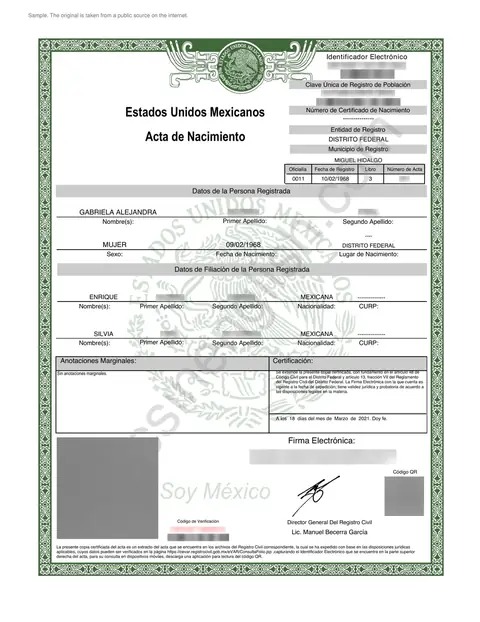
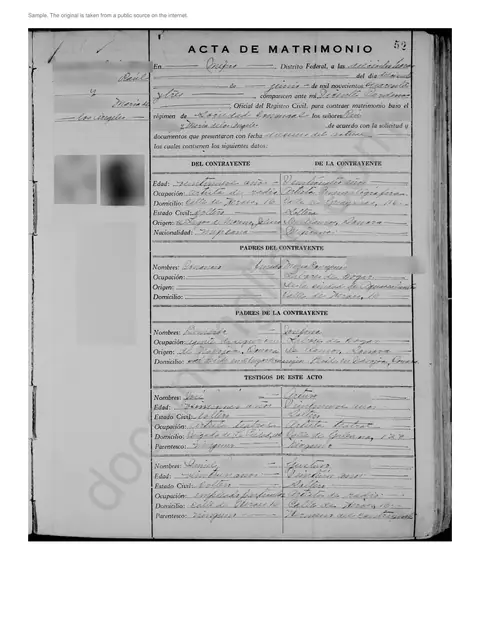
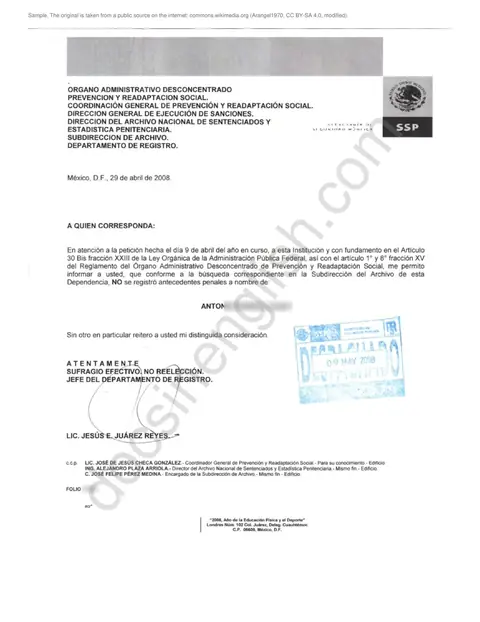
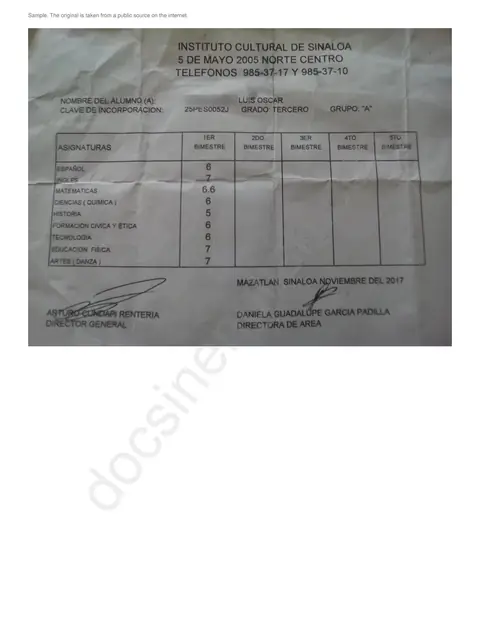
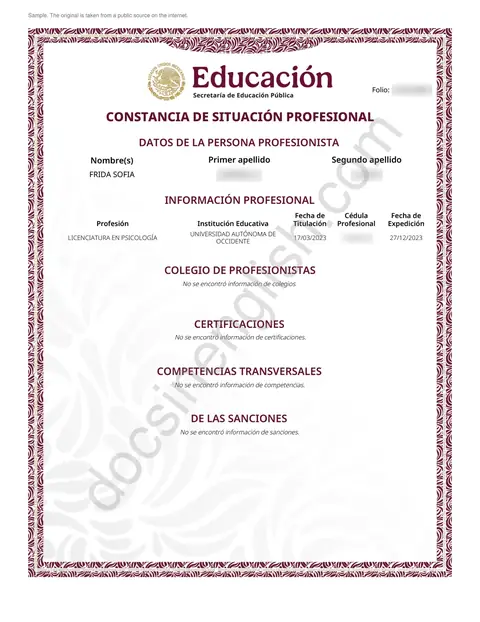
5 samplesEach sample has the original, the translation and the signed certificate. Personal details are blurred.
Questions
The court file is 40 pages. Do you translate all of it?
We translate every page you send, because USCIS asks for a full English translation of each document in a foreign language. Which pages of the file to send is for you or your attorney to decide.
How much does it cost?
$25 for the first page and $20 for each additional page in the same order, so a three-page sentencia is $65.
Do I need a notary or an apostille?
Not for USCIS: it asks for the translator’s signed certification, and it’s included. If the court’s certified copy has an apostille, we translate it too.
How long does it take?
1–4 documents: within 24 hours after payment; faster, within 12 hours (+$15 a page) or 3 hours (+$30 a page, paid between 8 am and 6 pm Pacific time). For 5 or more, we give you the date with the quote.
How we do it
- Full translation
every stamp, signature and handwritten line
- Signed certificate
with the translator’s name, address and phone
- A PDF, ready to file
original, translation and certificate, translation pages numbered
- Price
$25 for the first page up to 250 words, $20 for each additional page, in the same document or another one.
- Turnaround
1–4 documents: within 24 hours after payment; faster, within 12 hours (+$15 a page) or 3 hours (+$30 a page, paid between 8 am and 6 pm Pacific time). For 5 or more, we give you the date with the quote.
This is a summary of what the agency publishes, not legal advice.