What kind of translation do NVC and US consulates accept?
For an immigrant visa, every civil document that isn’t in English or in the official language of the country where you have your visa interview must come with a certified translation. The translator signs a certification that the translation is accurate and that they are competent to translate. You upload the translation to NVC in one file with the document.
What NVC and consulates require
An immigrant visa case goes through the National Visa Center (NVC) and then to a US embassy or consulate. The State Department page on civil documents (opens in a new tab) says that every document not written in English, or in the official language of the country where you apply, must come with a certified translation. The translation must include the translator’s signed certification: the translation is accurate, and the translator is competent to translate.
The page doesn’t require a licensed or accredited translator, or a notary.
What the translation must include
- An English translation of a document that isn’t in English or in the language of the country where you have your visa interview (scanning documents (opens in a new tab)).
- The translator’s signed certification that the translation is accurate and that they are competent to translate (civil documents (opens in a new tab)).
- One file with the document. The translation is scanned together with the foreign-language document into a single file (scanning documents (opens in a new tab)). The document goes first, then the English translation (civil documents FAQ (opens in a new tab)).
- A clear scan. Scans are in color, easy to read, and nothing is cut off (scanning documents (opens in a new tab)).
Which documents people usually translate
The State Department lists the civil documents applicants collect: birth certificates, marriage certificates, divorce decrees and other proof that a marriage ended, police certificates, court and prison records, military records and adoption documents (civil documents (opens in a new tab)). What to file in your case is for you or your attorney to decide.
How we translate them: birth certificate, marriage and divorce certificates, police certificate, military ID.
A family case starts with a petition to USCIS: which documents to translate for Form I-130. DV lottery cases are handled by the Kentucky Consular Center (KCC) (9 FAM 502.6-4 c(1)(a) (opens in a new tab)), not NVC: which documents to translate for the DV lottery.
Why NVC asks for corrections
If NVC decides after its review that the documents you submitted aren’t correct, it sends a notice asking you to correct them and submit the case again (uploading documents (opens in a new tab)). If the translation is to blame, one of the rules above was broken:
- a document that needs a translation doesn’t have one;
- the translator’s certification is missing, isn’t signed, or lacks one of its two statements;
- the translation is uploaded separately from the document, not in one file;
- the scan is hard to read or cut off.
Sample translations
12 samplesEach sample has the original, the translation and the signed certificate. Personal details are blurred.
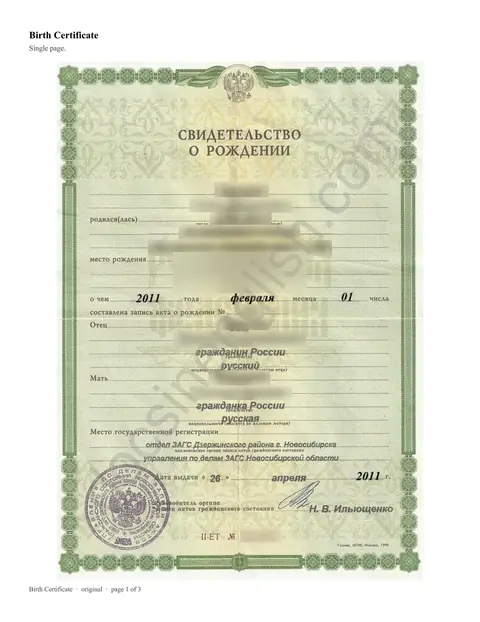 Russian birth certificateOpen, 3 pages
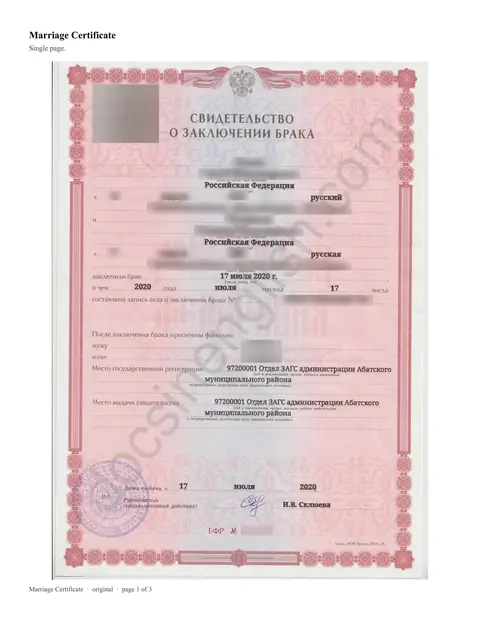 Russian marriage certificateOpen, 3 pages
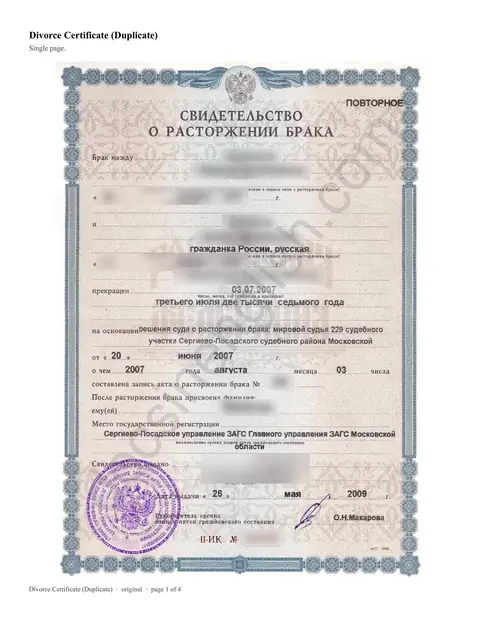 Russian divorce certificate (duplicate)Open, 3 pages
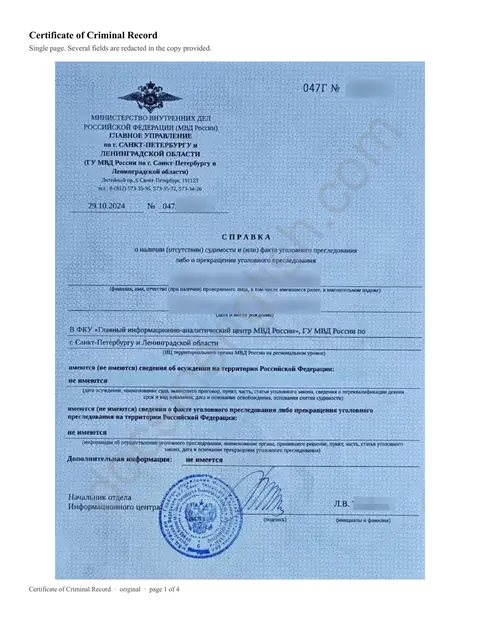 Russian police clearance certificateOpen, 3 pages
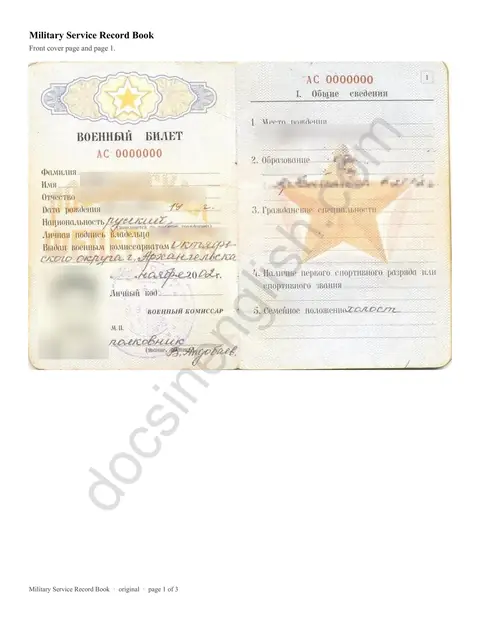 Russian military ID bookOpen, 3 pages
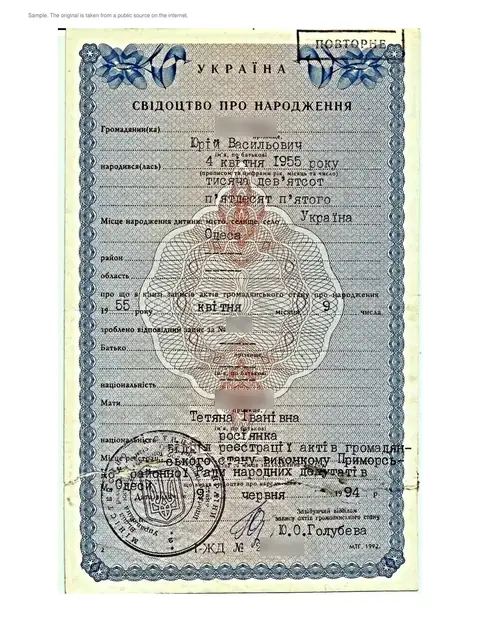 Ukrainian birth certificateOpen, 3 pages
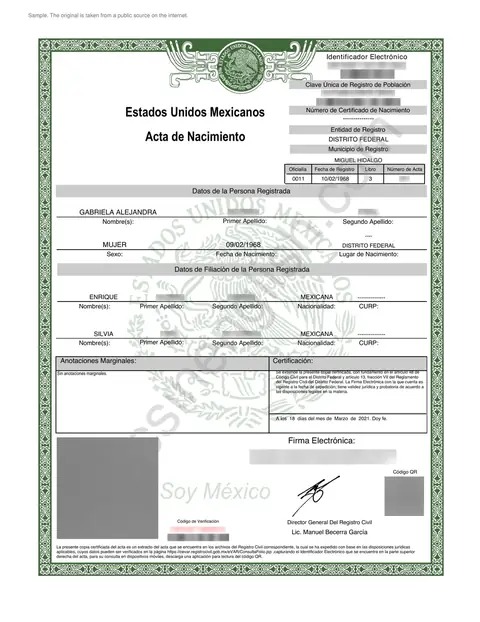 Mexican birth certificateOpen, 3 pages
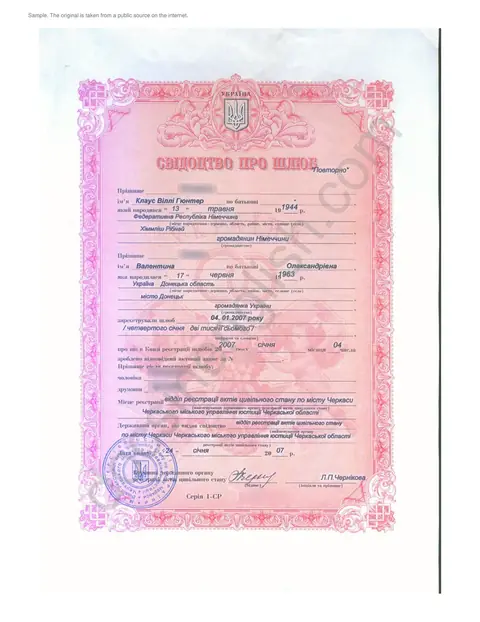 Ukrainian marriage certificateOpen, 3 pages
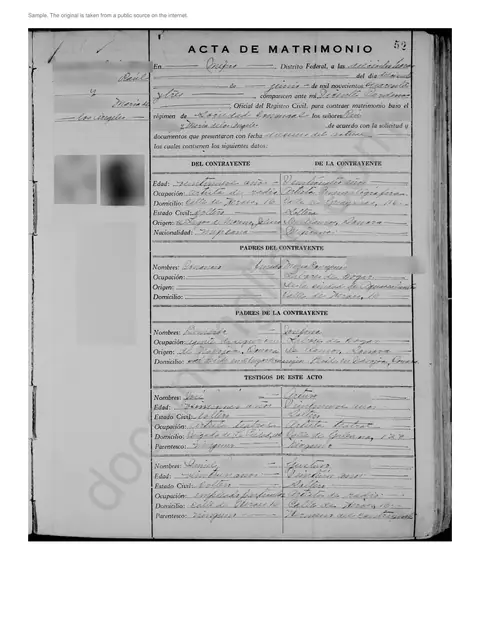 Mexican marriage record (1943, handwritten)Open, 4 pages
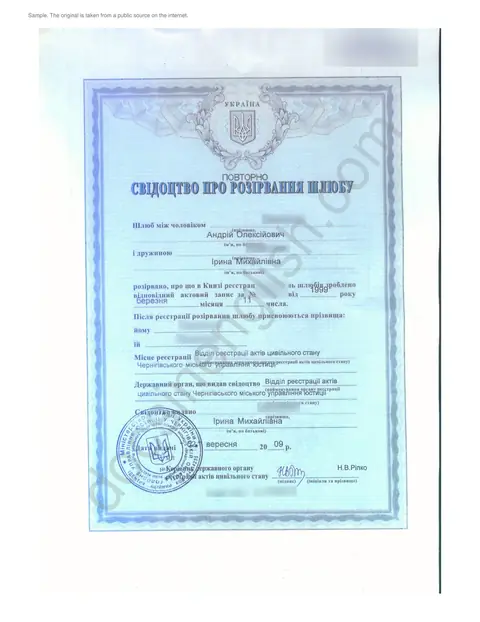 Ukrainian divorce certificateOpen, 3 pages
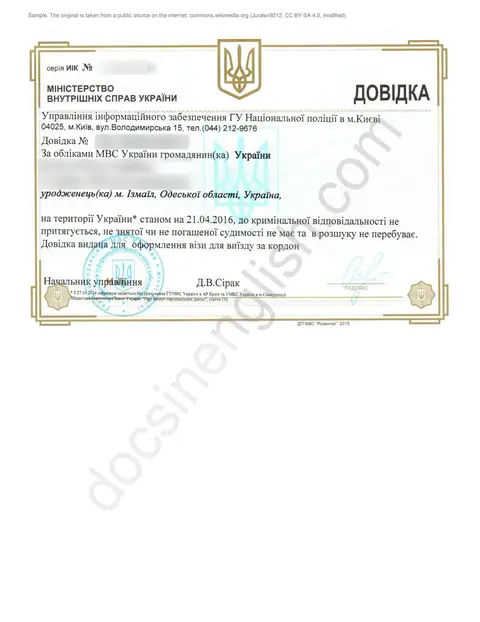 Ukrainian police clearance certificateOpen, 3 pages
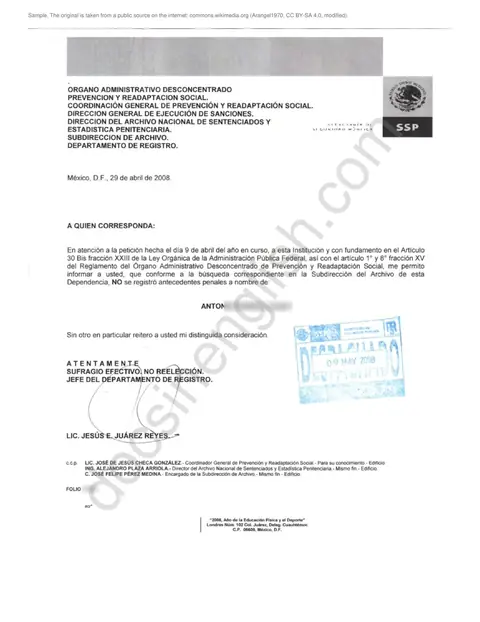 Mexican certificate of no criminal recordOpen, 3 pages
How we do it
- Full translation
every stamp, signature and handwritten line
- Signed certificate
with the translator’s name, address and phone
- A PDF, ready to file
original, translation and certificate, translation pages numbered
- Price
$25 for the first page up to 250 words, $20 for each additional page, in the same document or another one.
- Turnaround
1–4 documents: within 24 hours after payment; faster, within 12 hours (+$15 a page) or 3 hours (+$30 a page, paid between 8 am and 6 pm Pacific time). For 5 or more, we give you the date with the quote.
This is a summary of what the agency publishes, not legal advice.