Which documents need to be translated for Form I-130?
For a family petition (Form I-130), USCIS asks for a full English translation of every document in another language and the translator’s signed certificate. We translate Russian and Soviet documents for I-130: marriage, divorce and birth certificates, court decisions, bank statements and chats. We charge by the page: $25 for the first page and $20 for each additional one. For 1–4 documents, the translation is ready within 24 hours after payment.
What USCIS asks of a translation
Every document in another language comes with a full English translation. The translator signs a certificate that the translation is complete and accurate and that they are competent to translate from that language into English. The certificate includes the translator’s signature, printed name, the date and contact information (Form I-130 instructions, p. 3 (opens in a new tab)). For more, see What USCIS accepts.
Documents usually translated for a spouse petition
For a petition for a husband or wife, the instructions list (pp. 6–7 (opens in a new tab)):
- your marriage certificate;
- if either spouse was married before, proof that each earlier marriage legally ended.
The instructions also suggest adding evidence that the marriage is real:
- documents showing that you own property together;
- a lease showing that you live at the same address;
- documents showing that you share finances, such as bank statements;
- birth certificates of the children you have together;
- written statements from people who know about your marriage firsthand;
- any other documents showing that the marriage continues, such as receipts and emails about trips together or chats.
What to file in your case is for you or your attorney to decide.
Parents, children, brothers and sisters
In the instructions, family relationships are shown mainly by birth certificates (pp. 7–8 (opens in a new tab)). Below, “you” is the person filing the petition:
- a child: the child’s birth certificate showing your name; if you are the father, showing both parents’ names, plus the certificate of your marriage to the child’s mother and proof that any earlier marriages of the parents ended;
- your mother: your birth certificate showing your name and your mother’s name;
- your father: your birth certificate showing both parents’ names, your parents’ marriage certificate and proof that any earlier marriages of theirs ended;
- a brother or sister: your birth certificate and your sibling’s, showing at least one parent in common; if you share only a father, the certificates of his marriage to each mother and proof that earlier marriages ended;
- a stepparent or stepchild: the certificate of the stepparent’s marriage to the child’s parent, entered into before the child turned 18, proof that any earlier marriages ended, and the child’s birth certificate;
- adoption: the adoption decree and documents showing that the child lived with the adoptive parents and was in their custody for at least two years.
If a certificate you need isn’t available, the instructions ask for a statement from the authority that issues it certifying that the document isn’t available, plus other evidence, such as a baptism record, school records or written statements from people who know about the event (pp. 8–9 (opens in a new tab)). We translate such statements and letters the same way as certificates.
What to file in your case is for you or your attorney to decide.
If a name changed
If a name now differs from the one in the documents, USCIS asks for proof of the name change: a marriage certificate, an adoption decree or a court order (p. 8 (opens in a new tab)). We translate name change certificates from the civil registry office (ZAGS) the same way.
We spell names as they appear in your international passport. Include the spelling in your request, and we’ll use it in every document in your order. That way it’s clear at once that the birth certificate and the marriage certificate name the same person.
Removing conditions (Form I-751)
If the marriage is less than two years old when the green card is granted, USCIS gives conditional residence for two years, and the conditions are removed with Form I-751 (Form I-130 instructions, p. 8 (opens in a new tab)). The same translation rule applies to it (Form I-751 instructions, p. 2 (opens in a new tab)).
Among the evidence of the relationship, the I-751 instructions list children’s birth certificates, a lease or mortgage, joint accounts and other shared finances, and written statements from at least two people (pp. 5–6 (opens in a new tab)). If any of these are in Russian, such as bank statements, receipts or emails, we translate them.
What to file in your case is for you or your attorney to decide.
Next steps: NVC or a green card in the US
Next, depending on the case, the documents go to NVC and a consulate, or to USCIS with a green card application filed inside the US. What NVC asks of a translation is covered in What NVC accepts.
How we translate
We translate each document in full, with seals, stamps and handwritten notes. If a word can’t be read, the translation marks it [illegible] instead of guessing. The signed certificate with the translator’s name, address and phone number is included in the price. We send the translation by email.
Sample translations of these documents are further down the page; the rest are on the samples page.
Price
We charge by the page: $25 for the first page up to 250 words, $20 for each additional page in the same order. For example, a marriage certificate, a divorce certificate and two birth certificates, one page each, are $85.
Sample translations
16 samplesEach sample has the original, the translation and the signed certificate. Personal details are blurred.
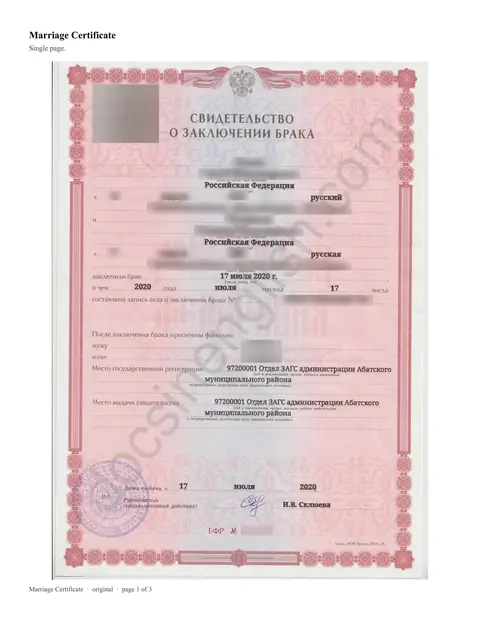 Russian marriage certificateOpen, 3 pages
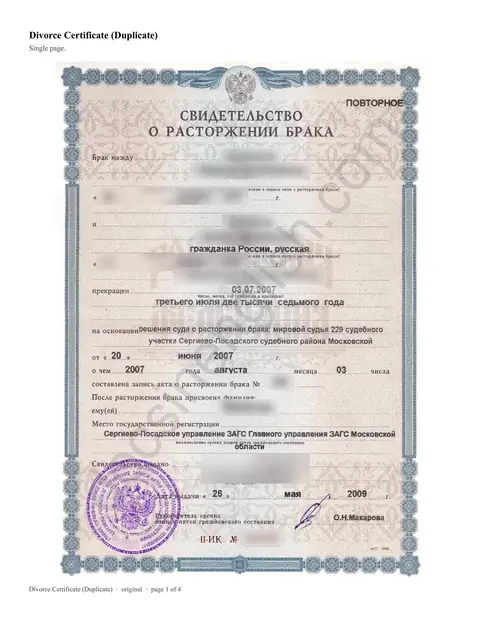 Russian divorce certificate (duplicate)Open, 3 pages
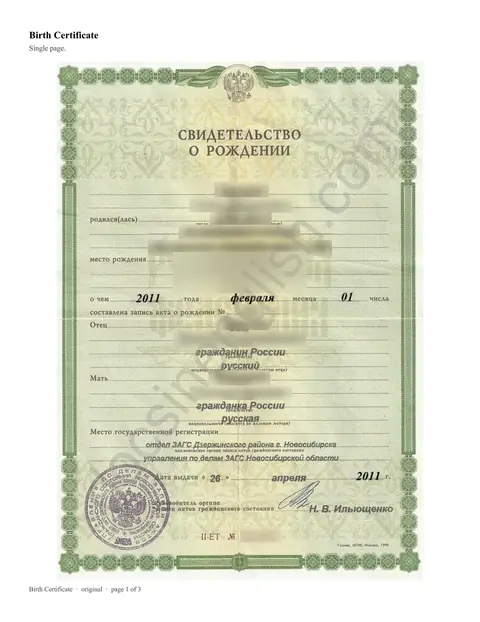 Russian birth certificateOpen, 3 pages
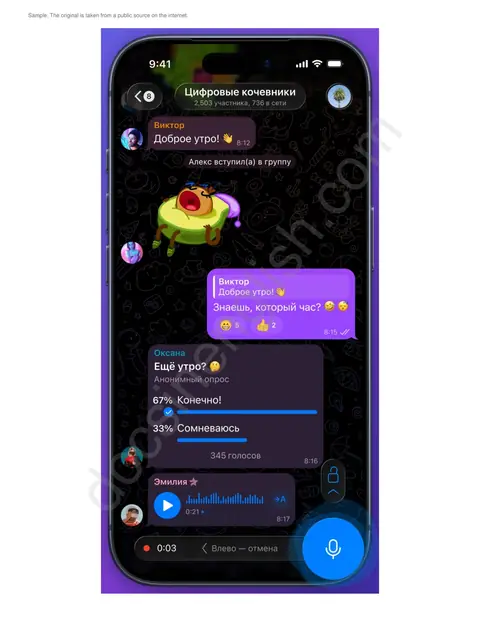 Telegram chats (Russian)Open, 4 pages
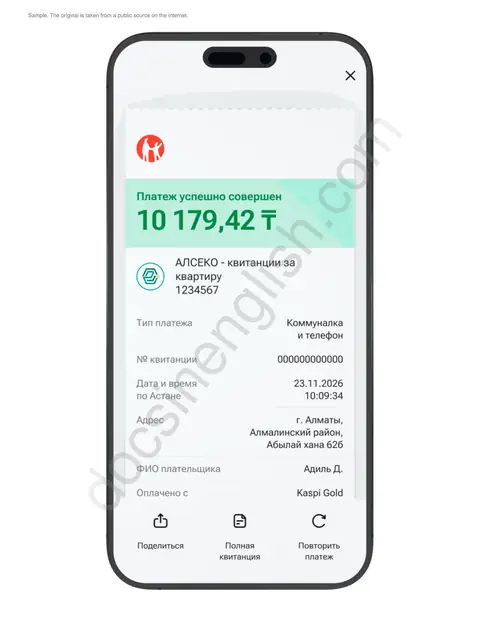 Bank app payment receipt (Russian)Open, 2 pages
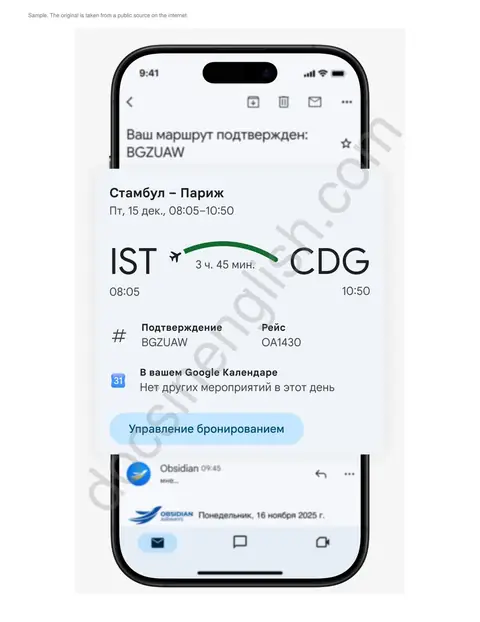 Flight booking email (Russian)Open, 2 pages
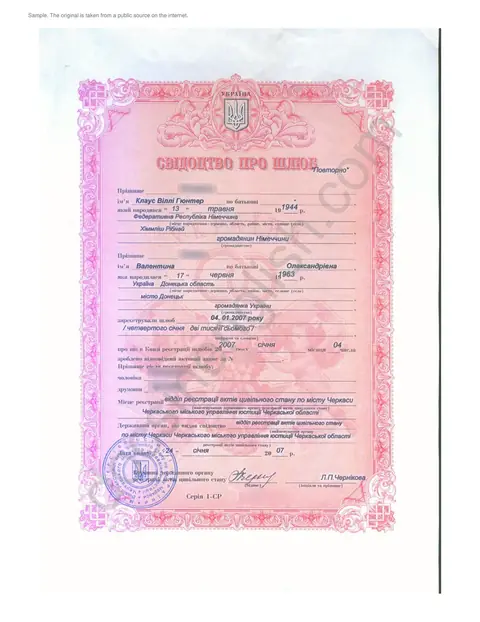 Ukrainian marriage certificateOpen, 3 pages
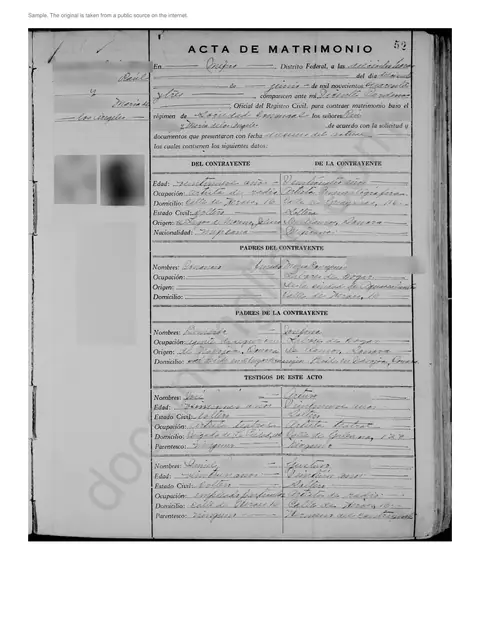 Mexican marriage record (1943, handwritten)Open, 4 pages
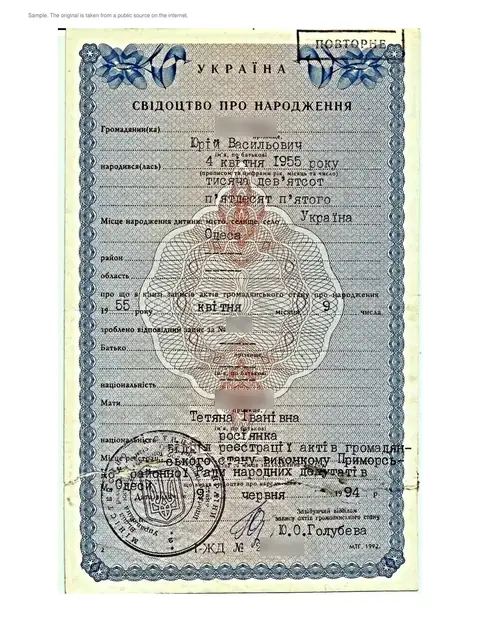 Ukrainian birth certificateOpen, 3 pages
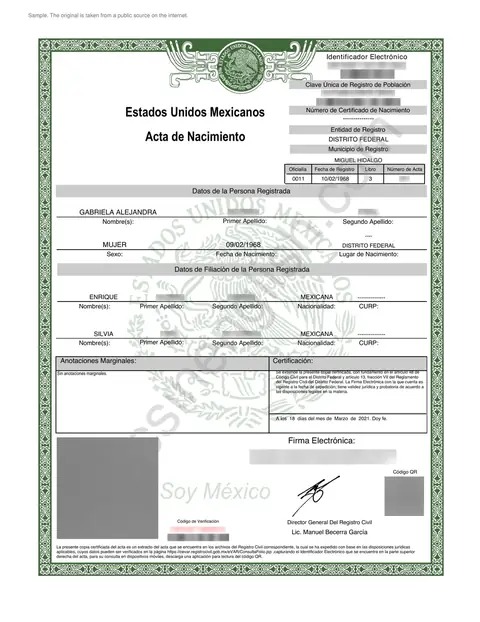 Mexican birth certificateOpen, 3 pages
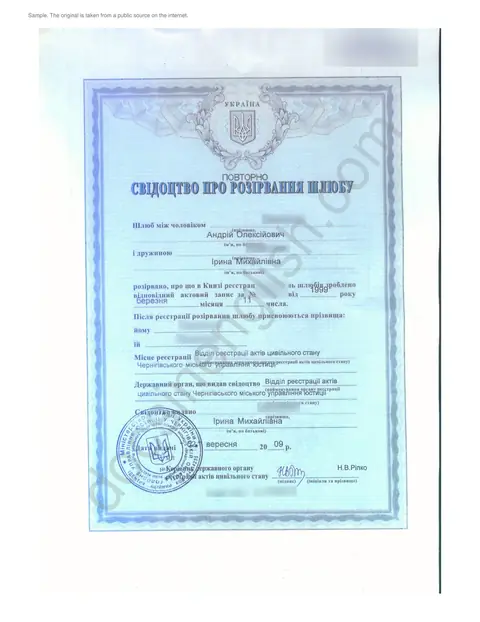 Ukrainian divorce certificateOpen, 3 pages
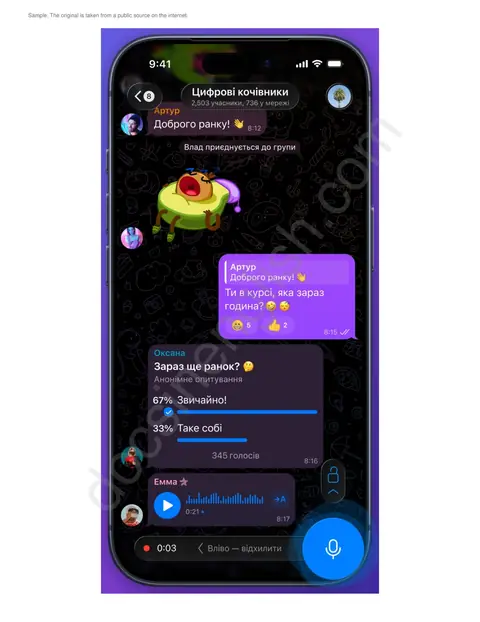 Telegram chats (Ukrainian)Open, 4 pages
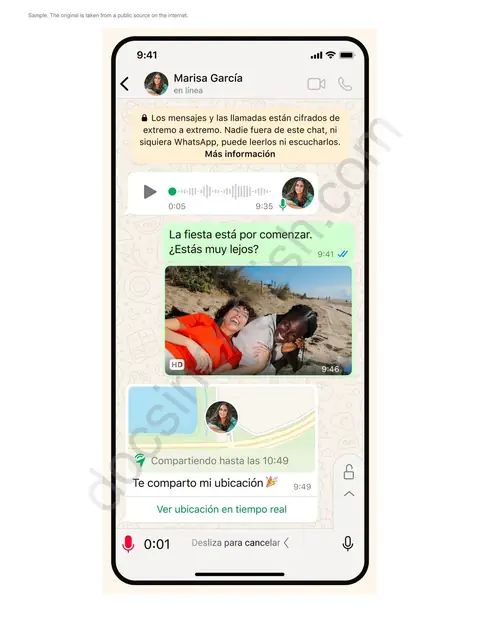 WhatsApp chats (Spanish)Open, 4 pages
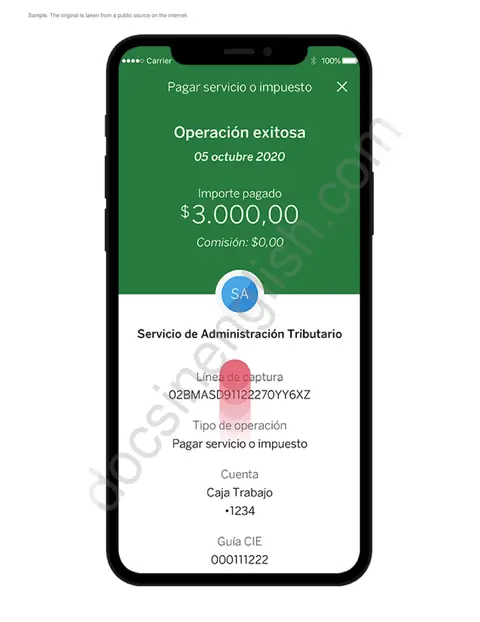 Bank app payment receipt (Spanish)Open, 2 pages
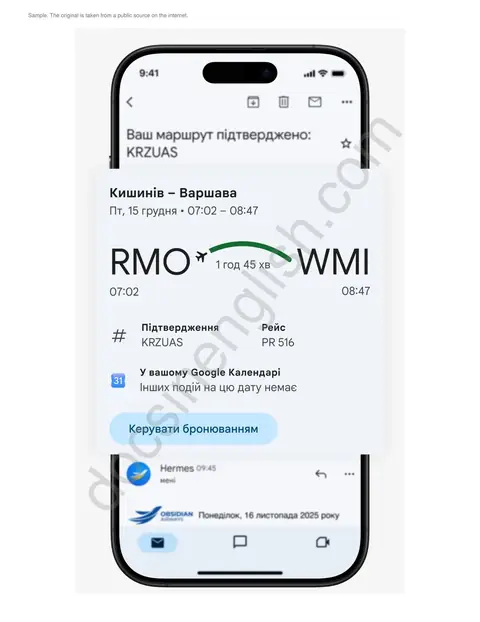 Booking email (Ukrainian)Open, 2 pages
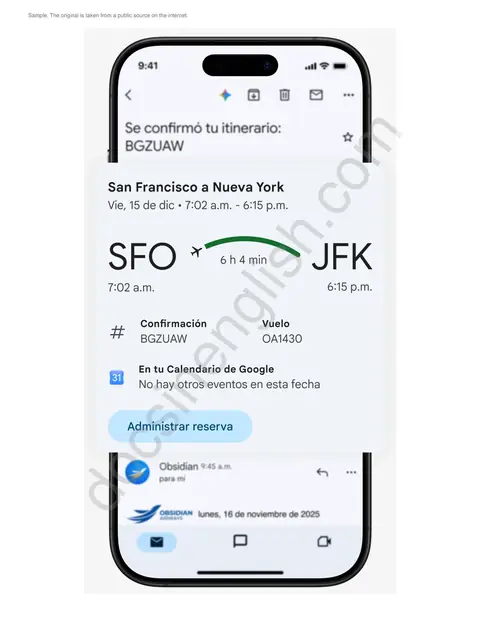 Flight booking email (Spanish)Open, 2 pages
Questions
How much does it cost?
We charge by the page: $25 for the first page and $20 for each additional page in the same order. A marriage certificate, a divorce certificate and two birth certificates, one page each, are $85.
Do I need a notary?
The Form I-130 instructions don’t require one: they ask for the translator’s signed certificate, and it’s included.
Do I need to translate my marriage certificate for I-130?
If it isn’t in English, yes: for a spouse petition, the Form I-130 instructions list the marriage certificate, and every document in another language needs a full English translation. What else to file in your case is for you or your attorney to decide.
Do you translate chats for a marriage petition?
Yes, every screenshot in full, with names, dates and emoji.
How long does it take?
1–4 documents: within 24 hours after payment; faster, within 12 hours (+$15 a page) or 3 hours (+$30 a page, paid between 8 am and 6 pm Pacific time). For 5 or more, we give you the date with the quote.
Will USCIS accept the translation?
No one can promise that an agency will accept a document. We follow its rules to the letter, and if an agency raises an issue with our translation, we fix it for free.
How we do it
- Full translation
every stamp, signature and handwritten line
- Signed certificate
with the translator’s name, address and phone
- A PDF, ready to file
original, translation and certificate, translation pages numbered
- Price
$25 for the first page up to 250 words, $20 for each additional page, in the same document or another one.
- Turnaround
1–4 documents: within 24 hours after payment; faster, within 12 hours (+$15 a page) or 3 hours (+$30 a page, paid between 8 am and 6 pm Pacific time). For 5 or more, we give you the date with the quote.
This is a summary of what the agency publishes, not legal advice.