Which documents need to be translated for the DV lottery (Diversity Visa)?
For the DV lottery (Diversity Visa), people usually translate the same civil documents as for other immigrant visas: birth and marriage certificates, police certificates, military records, plus documents on education or work experience. Under the State Department’s general rule, every document not written in English, or in the official language of the country where you apply, must come with a translation that carries the translator’s signed certification. Check your embassy’s requirements too. We translate these documents in full. We charge by the page: $25 for the first page and $20 for each additional one.
What the State Department asks of a translation
The DV lottery (Diversity Visa) is an immigrant visa program. Documents for it follow the State Department’s general rules for immigrant visas (9 FAM 504.4-4(A) (opens in a new tab)), and the documents a consulate may ask for are listed in 22 CFR 42.65(b) (opens in a new tab).
The translation rule is on the State Department page on civil documents (opens in a new tab): every document not written in English, or in the official language of the country where you apply, must come with a certified translation. The translation must include the translator’s signed certification: the translation is accurate, and the translator is competent to translate. More in What NVC accepts.
An embassy may publish additional instructions on its website (9 FAM 504.4-3(B) (opens in a new tab)), and before a DV interview applicants are referred to the instructions for their embassy (9 FAM 502.6-4 d(2) (opens in a new tab)). So check your embassy’s requirements.
Documents usually translated
The State Department lists the documents immigrant visa applicants collect, if they can be obtained (9 FAM 504.4-4(A) (opens in a new tab)). Of these, people usually translate:
- birth certificates of the applicant and of each family member immigrating with them;
- marriage certificates and proof that each prior marriage ended: a divorce decree, a death certificate or an annulment decree;
- police certificates, from age 16;
- court and prison records, if there was a conviction;
- military records, if the person served in the military of any country;
- adoption documents, for an adopted child.
The State Department also lists documents showing the principal applicant’s relationship to the spouse and all children, including those who won’t come along (9 FAM 504.4-4(D) (opens in a new tab)). What to file in your case is for you or your attorney to decide.
Education and work experience
The DV lottery has its own education or work experience requirement, set out in 22 CFR 42.33(a) (opens in a new tab). We don’t interpret it: whether your documents qualify is up to the consular officer (9 FAM 502.6-3 c(1), d(1)(a) (opens in a new tab)).
For education, the State Department gives examples: a certificate of completion, school transcripts, or other evidence from whoever keeps such records that shows the completed course of study (9 FAM 502.6-3 c(3) (opens in a new tab)). Among Russian documents, people usually translate the school certificate (attestat) for this, plus a diploma with its supplement if they have one.
For work experience, the State Department gives examples of what a consular officer may ask for: letters from employers or trainers with their name, address and title and a description of the work or training, resumes, or examples of previous work (9 FAM 502.6-3 d(1)(a) (opens in a new tab)). What to file in your case is for you or your attorney to decide.
Who handles DV cases: KCC, not NVC
After selection, DV cases are processed at the Kentucky Consular Center (KCC) (9 FAM 502.6-4 c(1)(a) (opens in a new tab)), not at the National Visa Center (NVC). KCC schedules the interview at a US embassy or consulate. If the applicant is already in the US, the case may go through USCIS as an adjustment of status instead (9 FAM 502.6-4 c(1)(b) (opens in a new tab)). Then the translation follows USCIS rules: What USCIS accepts. Documents usually translated for a green card are covered in our green card guide.
How we translate
We translate every document in full, with seals, stamps and handwritten notes. We spell names as they appear in your international passport. Include the spelling in your request, and we’ll use it in every document in your order, for every family member. If a word in a document can’t be read, the translation marks it [illegible] instead of guessing. The translator’s signed certificate with their name, address and phone is included in the price. We send the translation by email.
- Birth certificate: names, handwriting, Soviet forms.
- Marriage and divorce certificates: court decisions in full, with seals.
- Police certificate: every field of the form with its answer, and the apostille if there is one.
- Military ID: we translate ranks and positions instead of transliterating them.
- School certificate and diploma: grades exactly as on the document.
- Employment record book, orders and employment letters: every entry with its date and basis.
Sample translations are further down the page.
Price
We charge by the page: $25 for the first page of up to 250 words and $20 for each additional page in the same order. For example, two birth certificates, a marriage certificate, two police certificates and a school certificate, each on one page, come to $125.
Sample translations
11 samplesEach sample has the original, the translation and the signed certificate. Personal details are blurred.
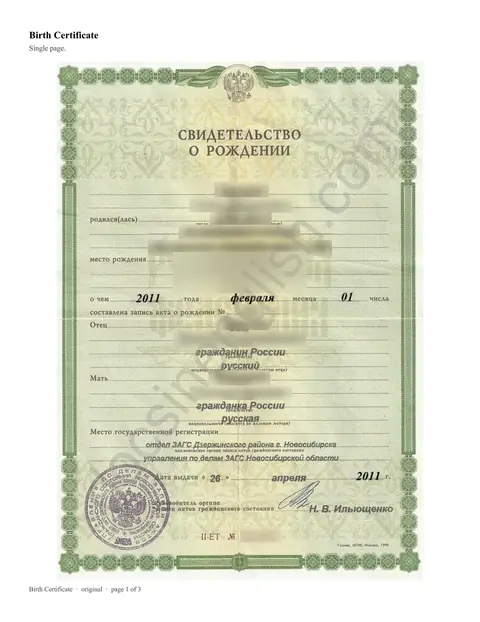 Russian birth certificateOpen, 3 pages
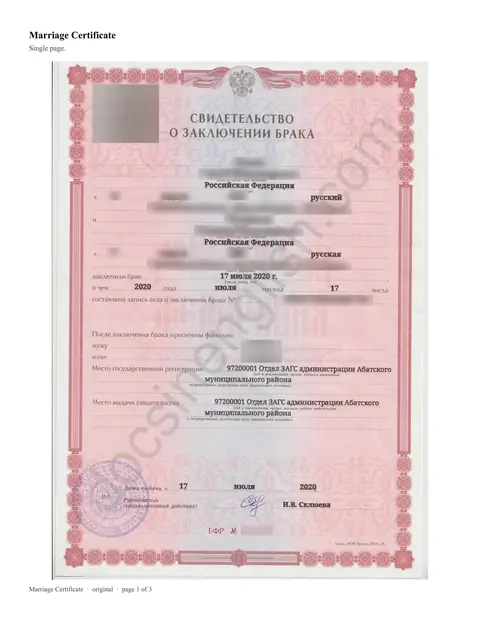 Russian marriage certificateOpen, 3 pages
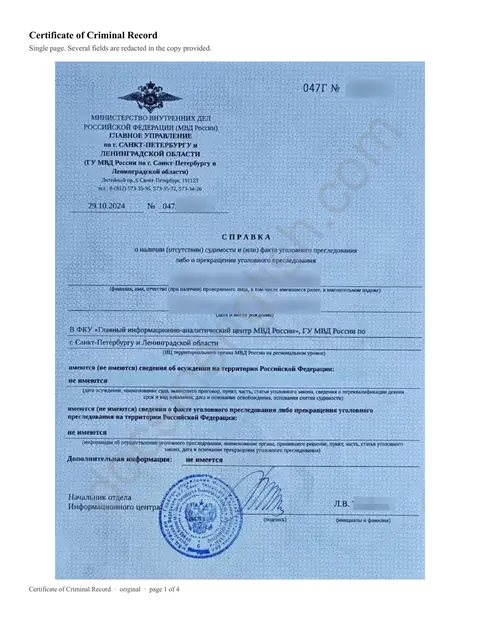 Russian police clearance certificateOpen, 3 pages
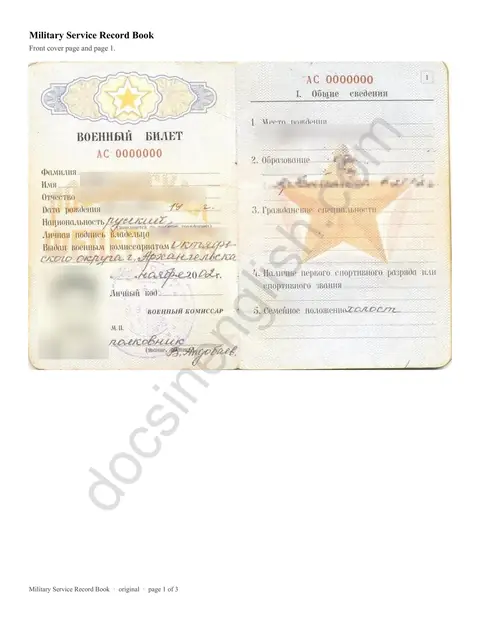 Russian military ID bookOpen, 3 pages
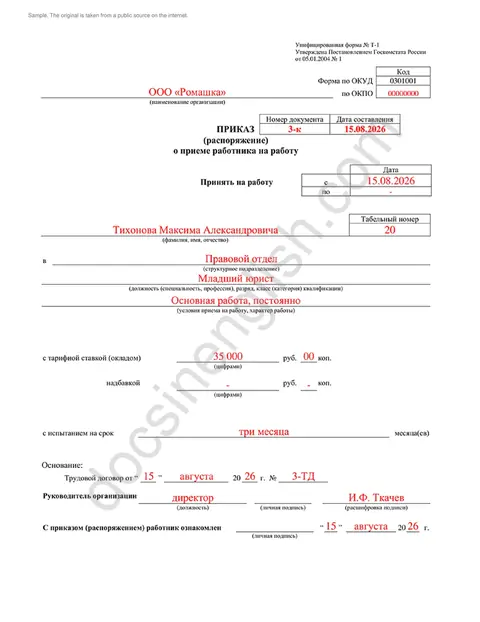 Russian hiring order (form T-1)Open, 3 pages
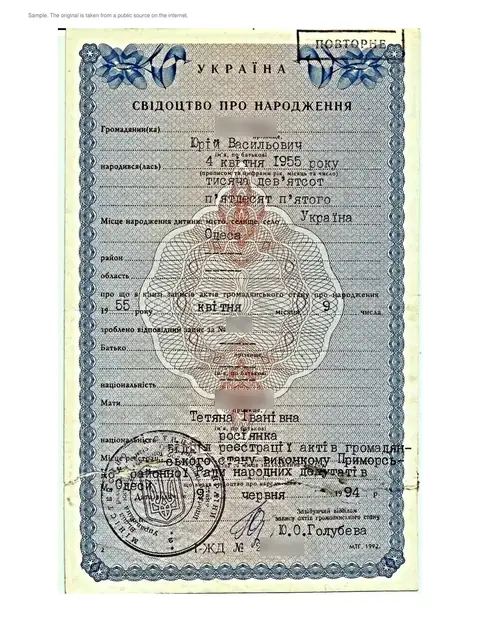 Ukrainian birth certificateOpen, 3 pages
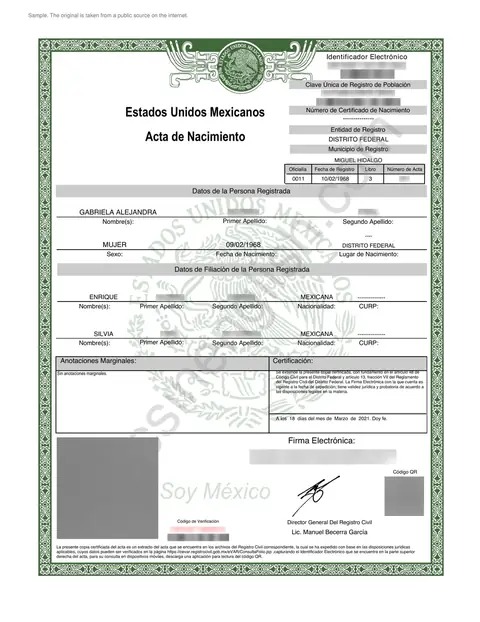 Mexican birth certificateOpen, 3 pages
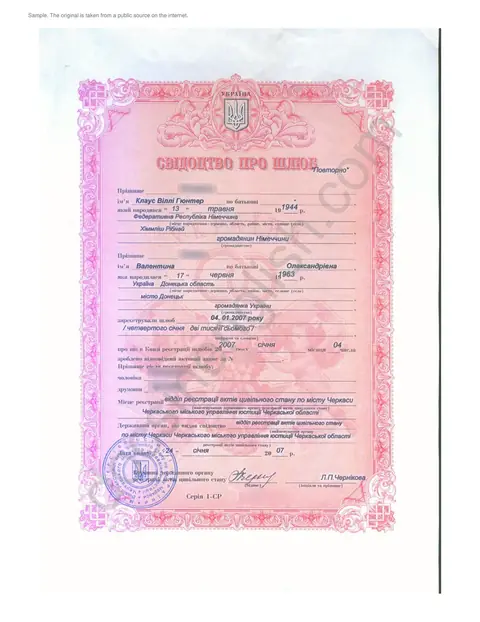 Ukrainian marriage certificateOpen, 3 pages
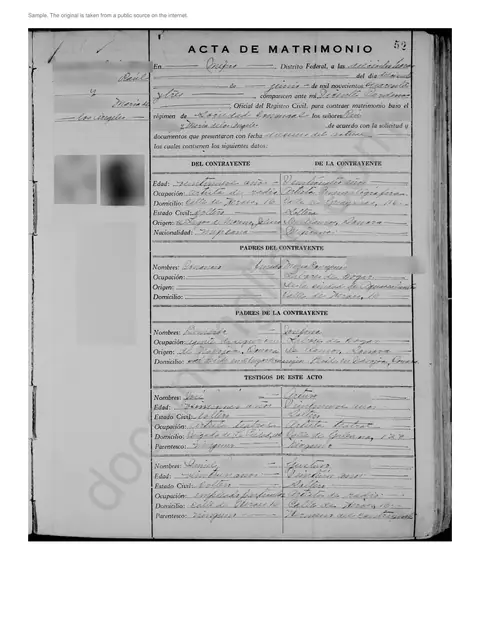 Mexican marriage record (1943, handwritten)Open, 4 pages
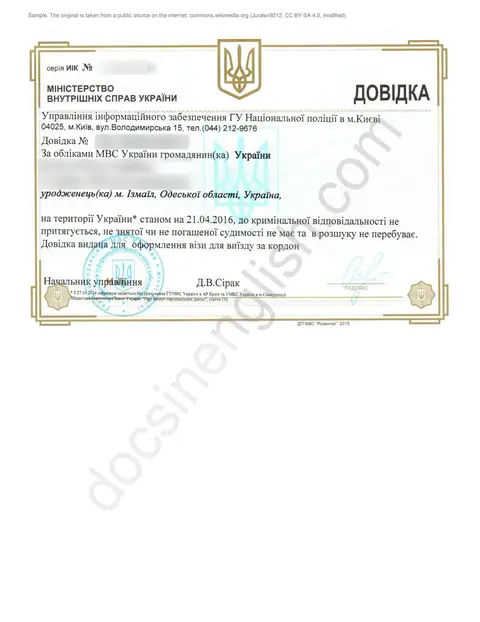 Ukrainian police clearance certificateOpen, 3 pages
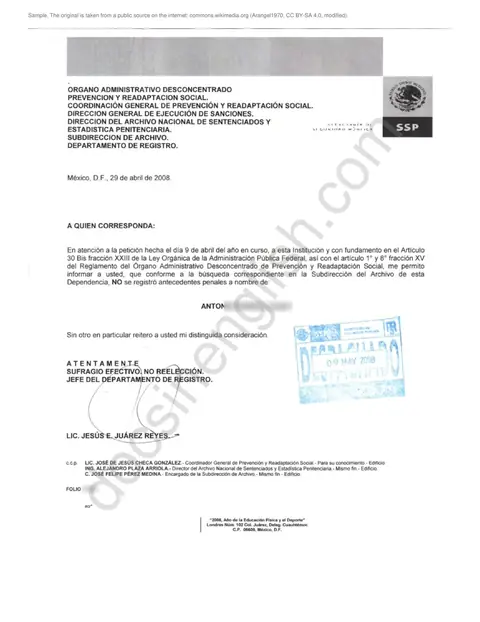 Mexican certificate of no criminal recordOpen, 3 pages
Questions
How much does it cost?
We charge by the page: $25 for the first page and $20 for each additional page in the same order. A certificate is usually one page. For example, two birth certificates, a marriage certificate, two police certificates and a school certificate, each on one page, come to $125.
Do I need a notary?
The State Department’s general rule doesn’t require one: it asks for the translator’s signed certification, and it’s included. Check your embassy’s requirements.
Do you translate school certificates and diplomas for the DV lottery?
Yes. We translate school certificates, diplomas and their supplements in full. Grades are translated exactly as they appear on the document, without converting them to US grades. Whether an education document qualifies is up to the consular officer.
How long does it take?
1–4 documents: within 24 hours after payment; faster, within 12 hours (+$15 a page) or 3 hours (+$30 a page, paid between 8 am and 6 pm Pacific time). For 5 or more, we give you the date with the quote.
Will the embassy accept the translation?
No one can promise that an agency will accept a document. We follow its rules to the letter, and if an agency raises an issue with our translation, we fix it for free.
How we do it
- Full translation
every stamp, signature and handwritten line
- Signed certificate
with the translator’s name, address and phone
- A PDF, ready to file
original, translation and certificate, translation pages numbered
- Price
$25 for the first page up to 250 words, $20 for each additional page, in the same document or another one.
- Turnaround
1–4 documents: within 24 hours after payment; faster, within 12 hours (+$15 a page) or 3 hours (+$30 a page, paid between 8 am and 6 pm Pacific time). For 5 or more, we give you the date with the quote.
This is a summary of what the agency publishes, not legal advice.