How do you translate a Mexican police certificate (constancia de antecedentes penales) for a US visa?
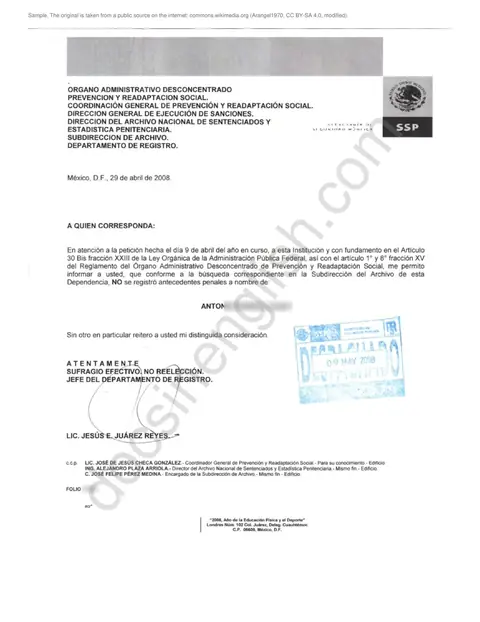
When a US agency asks for a translation of a Mexican police certificate, it means a full English translation with the translator’s signed certification. We translate both kinds: a state carta, certificado or constancia de no antecedentes penales, and the federal constancia de antecedentes penales federales (CAPF), with the folio, the QR code, the electronic signature and the stamps. A Mexican police certificate is usually one page: $25, ready within 24 hours after payment.
Which certificate the consulate asks for
The Department of State asks for a Mexican police certificate if you are over 18 and have lived in Mexico for six months (U.S. Department of State (opens in a new tab)). Mexico issues two kinds, and the Department of State asks you to try for the state one first:
- state: carta, certificado or constancia de no antecedentes penales, from the state’s security ministry (Secretaría de Seguridad) or attorney general (Fiscalía General del Estado); the procedure and the fee, from free to a small charge, depend on the state;
- federal: Constancia de Antecedentes Penales Federales (CAPF), from the federal Prevention and Social Readaptation agency (OADPRS) under the Ministry of Security and Citizen Protection; you provide it if you can’t get a state certificate. As of March 2026 it costs 232 Mexican pesos.
Mexican nationals need their CURP to apply. Foreign nationals need their migration card, an apostilled and translated birth certificate and a valid passport. The US Embassy and consulates can’t request police records on your behalf (the same page (opens in a new tab)).
Under the general rule, a police certificate is valid for two years, unless it comes from a country of previous residence you haven’t returned to since it was issued (Department of State (opens in a new tab)).
How the federal certificate is issued
The CAPF is requested only online, and it can be issued when a foreign embassy or consulate asks for it (OADPRS, frequently asked questions (opens in a new tab)). A Mexican national uploads a birth certificate and photo ID as PDF files, pays, and receives the certificate by email, with a QR code to check that it is genuine. The CAPF has no set expiry date: the authority that asks for it decides how recent it must be. An apostille is a separate procedure handled by the Ministry of the Interior (SEGOB).
What the translation includes
We translate the certificate in full, as USCIS requires (8 CFR 103.2(b)(3) (opens in a new tab)): the issuing agency and its letterhead, the folio and date, your name, the result of the search (for example, that no record was found), the QR code and electronic signature as printed, and the official’s name and signature.
Where the translation goes
- NVC and US consulates: police certificates are among the documents for an immigrant visa. The Department of State doesn’t ask for a translation of a police certificate in Spanish if you are applying for your visa in Mexico or another country where Spanish is an official language. What NVC accepts
- USCIS: for a green card, the Form I-485 instructions ask for certified police and court records of any criminal charges, arrests or convictions, including those outside the United States (Form I-485 instructions (opens in a new tab)). What USCIS accepts
- Immigration court: a typed certification with the translator’s address and phone. What the court accepts
Our Spanish documents are translated and certified by a native Spanish speaker. What to file in your case is for you or your attorney to decide.
Sample translations
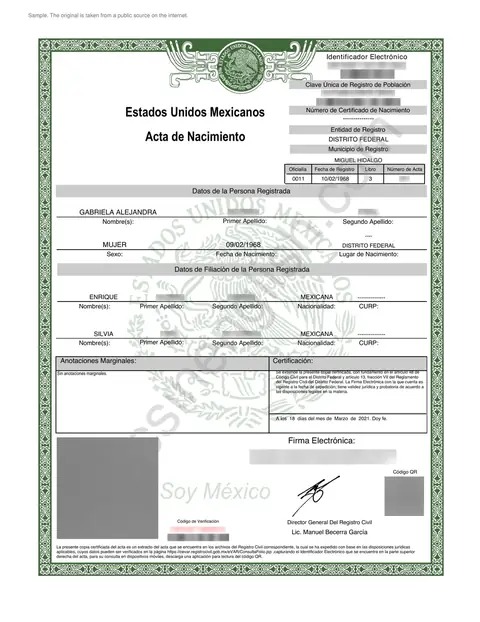
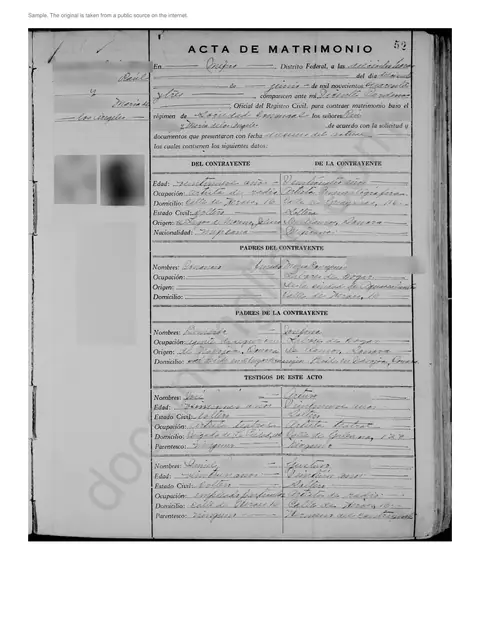
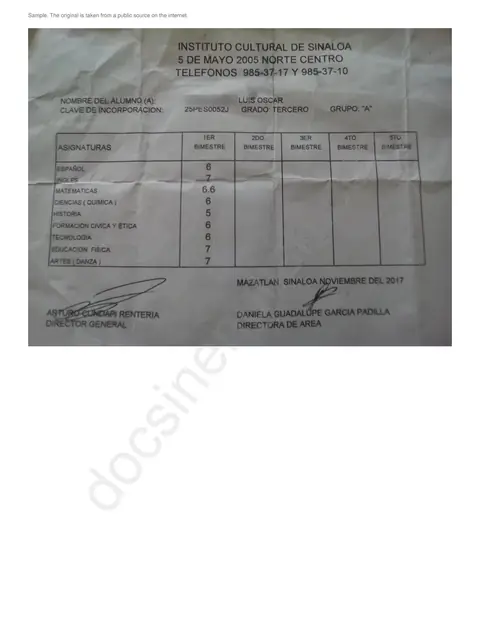
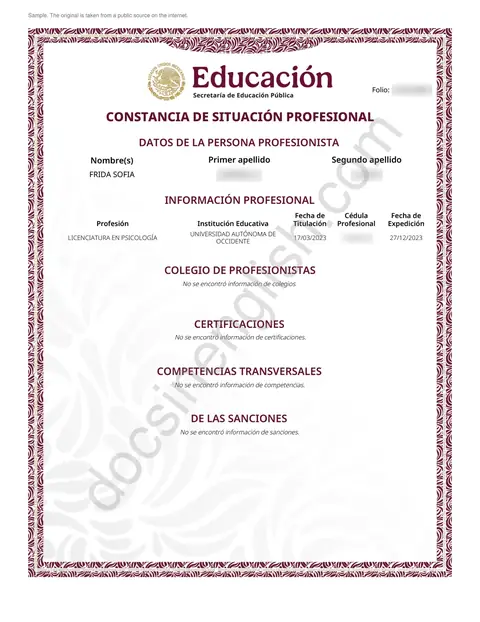
5 samplesEach sample has the original, the translation and the signed certificate. Personal details are blurred.
Questions
I live in the US now. Can I still get the federal certificate?
The federal process is online only. Its help page says that from abroad you pay with a Visa or Mastercard issued by a bank operating in Mexico. Send us the certificate as it arrives.
How much does it cost?
A Mexican police certificate is usually one page: $25. Each additional page in the same order is $20, so a state and a federal certificate with an apostille page come to $65.
Do I need a notary or an apostille?
Not for USCIS: it asks for the translator’s signed certification, and it’s included. In Mexico an apostille is a separate procedure from the certificate; if you have one, we translate it too.
How long does it take?
1–4 documents: within 24 hours after payment; faster, within 12 hours (+$15 a page) or 3 hours (+$30 a page, paid between 8 am and 6 pm Pacific time). For 5 or more, we give you the date with the quote.
How we do it
- Full translation
every stamp, signature and handwritten line
- Signed certificate
with the translator’s name, address and phone
- A PDF, ready to file
original, translation and certificate, translation pages numbered
- Price
$25 for the first page up to 250 words, $20 for each additional page, in the same document or another one.
- Turnaround
1–4 documents: within 24 hours after payment; faster, within 12 hours (+$15 a page) or 3 hours (+$30 a page, paid between 8 am and 6 pm Pacific time). For 5 or more, we give you the date with the quote.
This is a summary of what the agency publishes, not legal advice.