Which documents need to be translated for a K-1 fiancé(e) visa?
For a K-1 fiancé(e) visa, USCIS asks for a full English translation of every document that isn’t in English, with the translator’s signed certification. People usually translate birth and divorce certificates, police certificates and, as proof that the couple met, chats, emails and tickets. We make certified translations of these Russian documents in full, with every seal, stamp and handwritten note. We charge by the page: $25 for the first page and $20 for each additional one. For 1–4 documents, the translation is ready within 24 hours after payment.
What USCIS asks of a translation for Form I-129F
The first stage of a K-1 visa is a petition to USCIS for a fiancé or fiancée, Form I-129F. The Form I-129F instructions (opens in a new tab) (edition 01/20/25, p. 2) say that every document with information in a foreign language must come with a full English translation. The translator signs a certification that the translation is complete and accurate and that they are competent to translate from the foreign language into English. The certification includes the translator’s signature, printed name, the date of signing and contact information. The same rule for every document filed with USCIS is in 8 CFR 103.2(b)(3) (opens in a new tab).
The instructions don’t require a licensed or accredited translator, and they don’t mention a notary. More on the rule: What USCIS accepts.
Documents usually translated for Form I-129F
The Form I-129F instructions list the documents that go with the petition. If a document is in Russian, it needs a translation. People usually translate:
- Proof that earlier marriages ended, if either partner was married before: a divorce certificate or court divorce decree, an annulment, or a spouse’s death certificate (p. 10 (opens in a new tab)).
- Proof of a name change, if either partner uses a name other than the one on the documents filed: a marriage certificate, an adoption decree or a court order (p. 11 (opens in a new tab)).
- The marriage broker consent form, if the couple met through an international marriage broker (IMB): the fiancé(e)’s signed consent to release their contact information. If it isn’t in English, the instructions expressly require a certified English translation (p. 6 (opens in a new tab)).
- Court and police records, if the US citizen was ever arrested for or convicted of one of the crimes the instructions list: certified copies of all those records (p. 6 (opens in a new tab)).
How we translate them: marriage and divorce certificates.
What to file in your case is for you or your attorney to decide.
Proof you met: chats, emails, tickets
For a K-1 visa, the Form I-129F instructions ask for evidence of two things (p. 11 (opens in a new tab)):
- The intention to marry within 90 days of entry. The instructions name, for example, statements of intent to marry signed by both partners.
- An in-person meeting within the two years before the petition was filed. The instructions name a written statement about the meeting, copies of airline tickets, passport pages, or other evidence.
Anything here that isn’t in English gets translated in full: a fiancé(e)’s statement written in Russian, messenger chats, emails, ticket bookings and receipts, passport pages with stamps.
Which evidence to file is for you or your attorney to decide.
Documents for the embassy
The second stage is the visa application at a US embassy or consulate. The State Department’s manual for consular officers (the Foreign Affairs Manual) lists the documents for it in 9 FAM 502.7-3(C)(3) (opens in a new tab). Of these, people usually translate:
- a birth certificate;
- police certificates, for applicants aged 16 or older;
- proof that earlier marriages ended, if it wasn’t filed with the petition;
- proof of the relationship with the US citizen, brought to the interview.
For a child traveling with the fiancé(e), the same section names a birth certificate and, from age 16, police certificates.
That section says nothing about translation. Check the translation requirements for the embassy stage on your embassy’s or consulate’s website. How the State Department describes translations for immigrant visas: What NVC accepts.
How we translate these documents: birth certificate, police certificate, divorce certificate. Sample translations of these documents are further down the page.
What to file in your case is for you or your attorney to decide.
After the wedding: the green card
A K-1 visa lets a fiancé(e) enter the United States, marry, and then apply for a green card, which the instructions call adjustment of status (p. 1 (opens in a new tab)). If that stage calls for translations of Russian documents, we make them under the same USCIS rules.
How we translate
- In full. We translate every document completely: every field, seal, stamp, handwritten note and mark on the back, as USCIS requires (8 CFR 103.2(b)(3) (opens in a new tab)). A summary doesn’t count (USCIS Policy Manual (opens in a new tab)). If a word can’t be read, the translation marks it [illegible] instead of guessing.
- The same names in every document. We spell names as they appear in your international passport. Include the spelling in your request, and we’ll use it in every document in your order.
- With the translator’s certification. Every translation comes with a signed certification: the translation is complete and accurate, and the translator is competent to translate. It has the translator’s signature, printed name, the date and contact information: everything the Form I-129F instructions list.
- By email. We send the finished translation by email.
Price
We charge by the page: $25 for the first page and $20 for each additional page in the same order. A birth certificate, a divorce certificate and a police certificate are usually one page each, $65 together. Chats and emails are priced the same way, by the page.
Sample translations
14 samplesEach sample has the original, the translation and the signed certificate. Personal details are blurred.
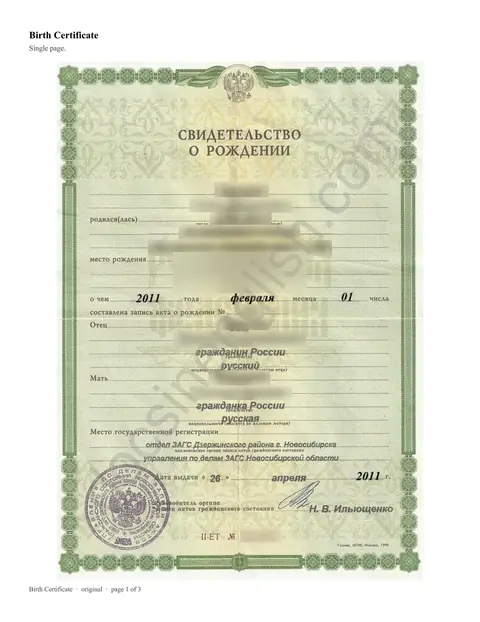 Russian birth certificateOpen, 3 pages
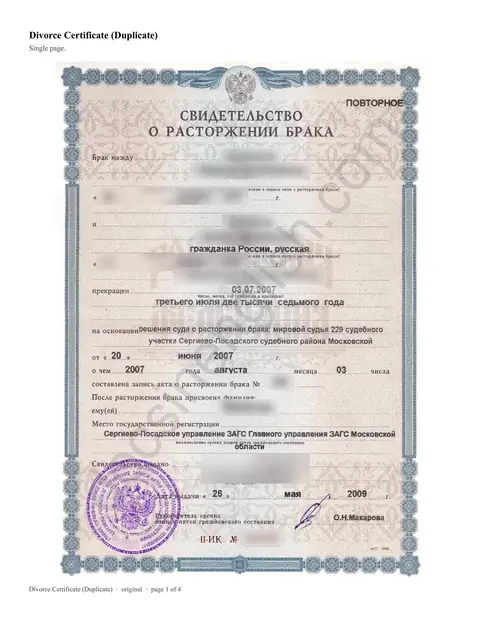 Russian divorce certificate (duplicate)Open, 3 pages
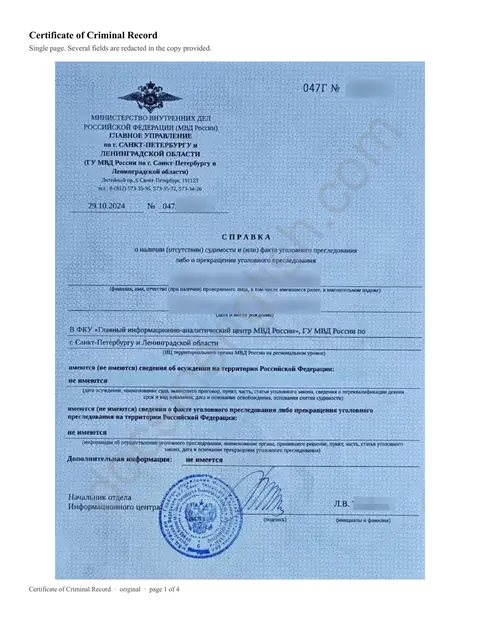 Russian police clearance certificateOpen, 3 pages
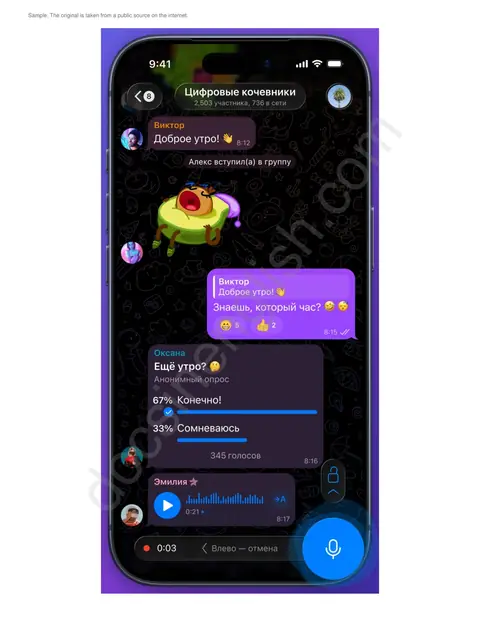 Telegram chats (Russian)Open, 4 pages
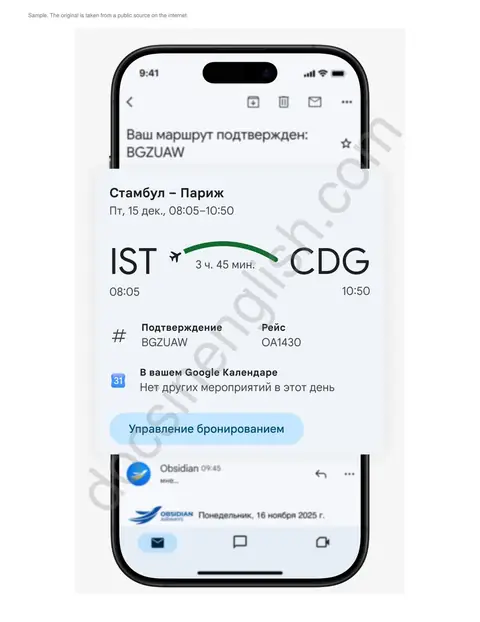 Flight booking email (Russian)Open, 2 pages
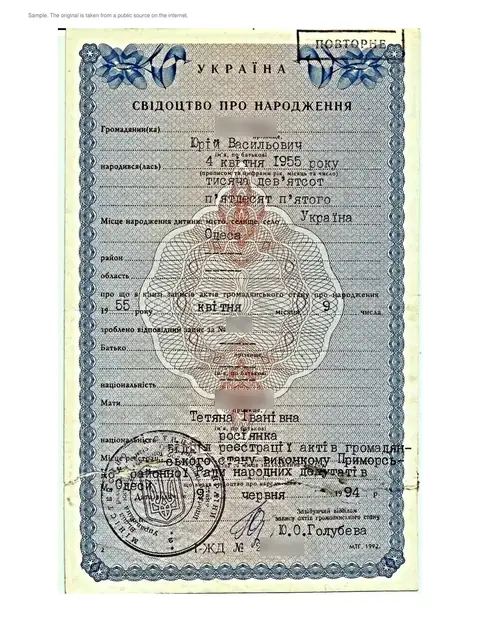 Ukrainian birth certificateOpen, 3 pages
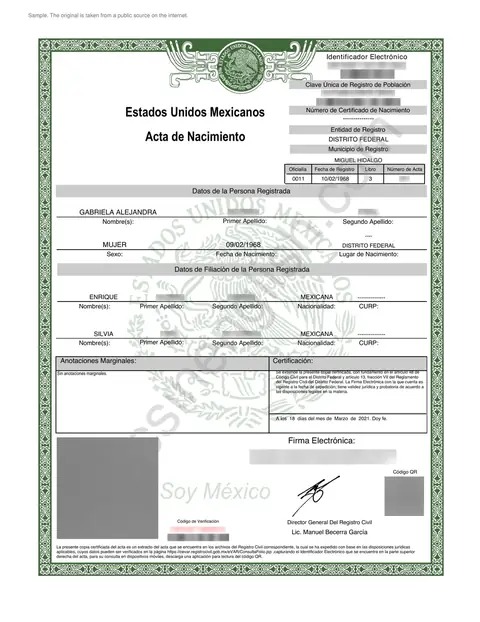 Mexican birth certificateOpen, 3 pages
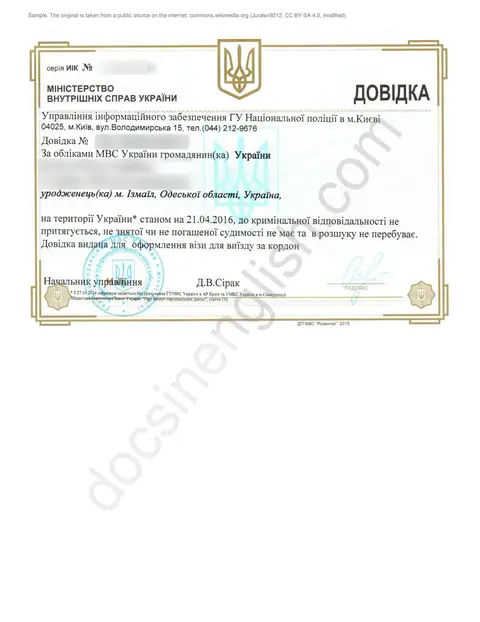 Ukrainian police clearance certificateOpen, 3 pages
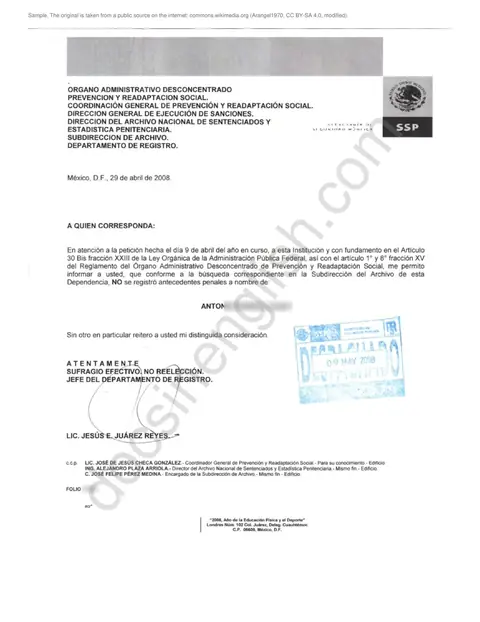 Mexican certificate of no criminal recordOpen, 3 pages
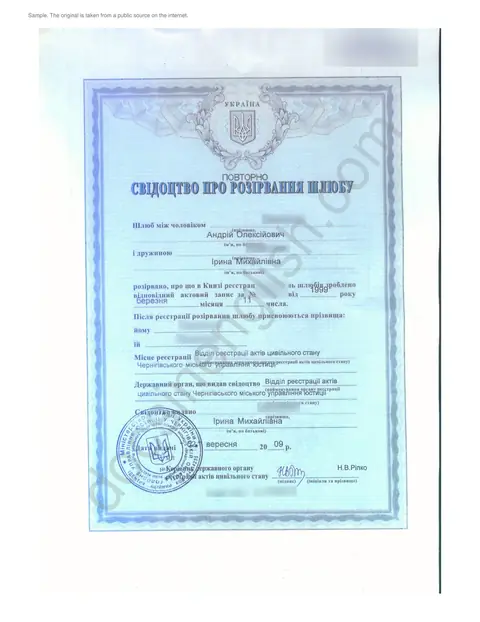 Ukrainian divorce certificateOpen, 3 pages
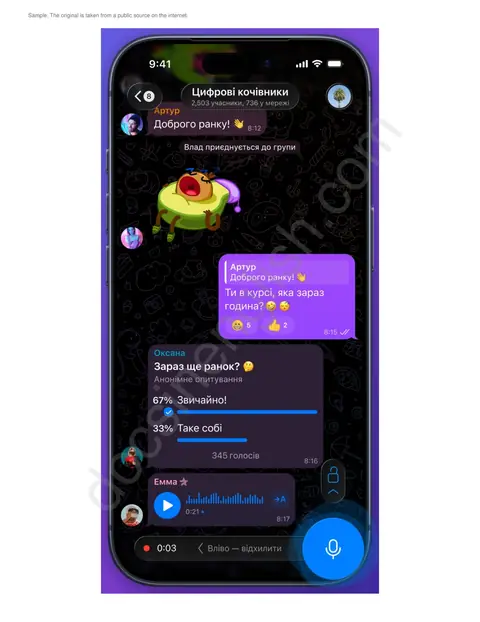 Telegram chats (Ukrainian)Open, 4 pages
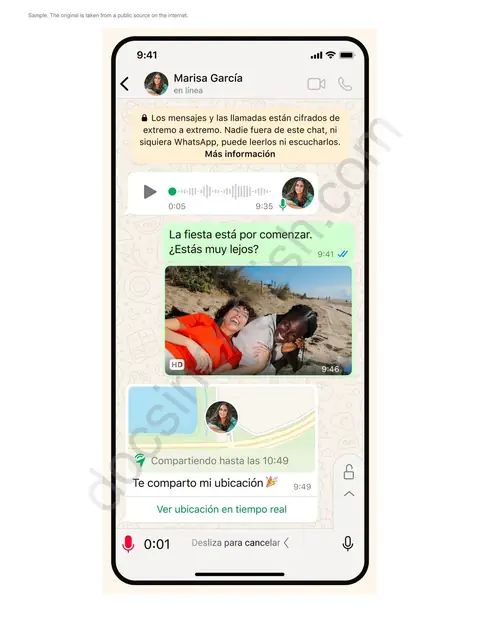 WhatsApp chats (Spanish)Open, 4 pages
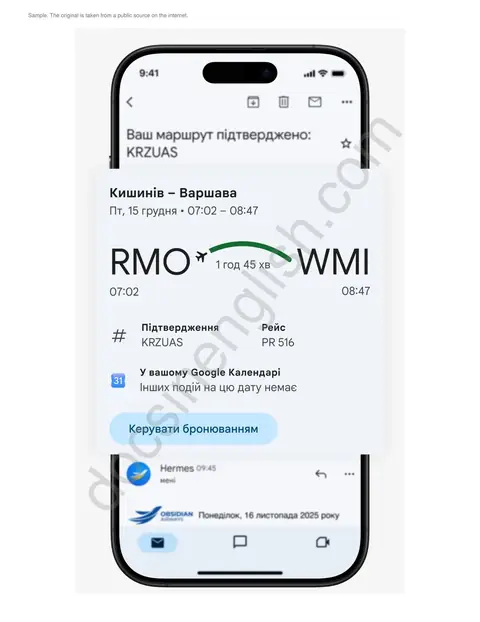 Booking email (Ukrainian)Open, 2 pages
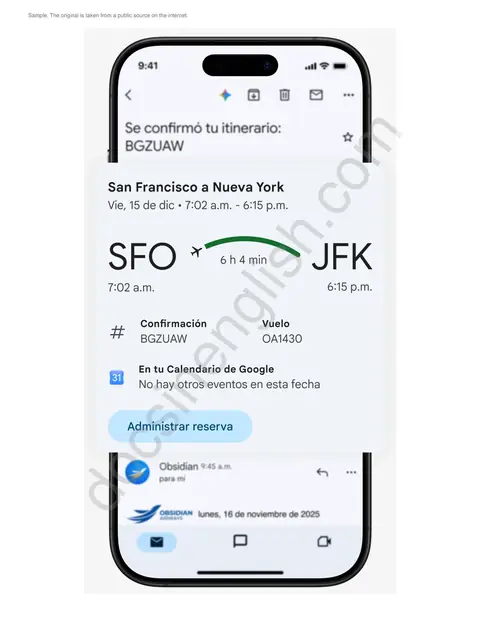 Flight booking email (Spanish)Open, 2 pages
Questions
How much does it cost?
We charge by the page: $25 for the first page and $20 for each additional page in the same order. A one-page birth certificate, divorce certificate and police certificate come to $65. Send photos of your documents, and we’ll give you the exact price.
Do I need a notary?
Not for the Form I-129F petition: the USCIS instructions ask for the translator’s signed certificate, and it’s included. For the embassy stage, check your embassy’s or consulate’s requirements.
Do chats need translation for a K-1 visa?
The Form I-129F instructions ask for a full English translation of every document in a foreign language, and chats are no exception. We translate every screenshot you send in full. Which messages to file is for you or your attorney to decide.
How long does it take?
1–4 documents: within 24 hours after payment; faster, within 12 hours (+$15 a page) or 3 hours (+$30 a page, paid between 8 am and 6 pm Pacific time). For 5 or more, we give you the date with the quote.
Will USCIS or the embassy accept the translation?
No one can promise that an agency will accept a document. We follow its rules to the letter, and if an agency raises an issue with our translation, we fix it for free.
How we do it
- Full translation
every stamp, signature and handwritten line
- Signed certificate
with the translator’s name, address and phone
- A PDF, ready to file
original, translation and certificate, translation pages numbered
- Price
$25 for the first page up to 250 words, $20 for each additional page, in the same document or another one.
- Turnaround
1–4 documents: within 24 hours after payment; faster, within 12 hours (+$15 a page) or 3 hours (+$30 a page, paid between 8 am and 6 pm Pacific time). For 5 or more, we give you the date with the quote.
This is a summary of what the agency publishes, not legal advice.