How do you translate Russian articles about you for an O-1, EB-1A or EB-2 NIW case?
For an EB-1A green card, and for an O-1 in science, education, business or athletics, published material about you is filed with its title, date and author and any necessary translation. For EB-2 NIW, the USCIS Policy Manual names published articles or media reports about your achievements among the evidence. For a document in Russian, USCIS asks for a full English translation with the translator’s signed certificate. We make certified translations of Russian publications: an article with its comments, an industry rating, a company web page or a presentation, with charts and tables. We charge by the page: $25 for the first page and $20 for each additional one. Send screenshots or a PDF, and we’ll give you the price and the delivery date.
What the translation includes
We translate every page you send in full, as USCIS requires (8 CFR 103.2(b)(3) (opens in a new tab)). A summary doesn’t count (USCIS Policy Manual (opens in a new tab)): we translate everything on the page, not only the paragraphs about you. The translation has:
- the title, date and author of the publication: for EB-1A, and for an O-1 in science, education, business or athletics, the rules require them (8 CFR 204.5(h)(3)(iii) (opens in a new tab), 8 CFR 214.2(o)(3)(iii)(B)(3) (opens in a new tab));
- the full text, photo captions and photo credits, the view count;
- comments: the author, the date and time, the replies, the upvotes and downvotes;
- charts: the caption, the units, the legend and every value;
- tables and footnotes;
- menus, logos, icons and QR codes, described in square brackets, such as [Logo:] or [QR code].
The translation opens with a note on what the square brackets mean, and every sheet or slide is labeled, such as [Slide 1 of 2], so it’s clear which page of the original the text belongs to.
Amounts, abbreviations and typos
Amounts and units stay as they are in the original: we don’t convert billions of rubles to dollars. If a word is abbreviated in the publication itself, we mark it [abbreviated in the original]; a typo in the original stays and is marked [typo in the original]. If text on a logo or a photo can’t be read, the translation marks it [illegible] instead of guessing.
We spell names as they appear in your international passport. Include the spelling in your request, and we’ll use it in every document in your order.
Which publications USCIS counts as being about you
For EB-1A, the USCIS Policy Manual explains that published material should be about you and your work, not just about your employer. Marketing materials that promote your products or services are not generally considered material about you, even a seemingly objective article that you or your employer paid for. Material on a broader topic may count if it discusses your work in substance and mentions you in connection with it (USCIS Policy Manual (opens in a new tab)).
Another EB-1A criterion is a leading or critical role for an organization with a distinguished reputation (8 CFR 204.5(h)(3)(viii) (opens in a new tab)). Among the factors of reputation, the Policy Manual names the scale of the organization’s customer base and relevant media coverage (USCIS Policy Manual (opens in a new tab)).
Publications for EB-2 NIW
One of the three NIW prongs is that you are well positioned to advance the proposed endeavor (Matter of Dhanasar, 26 I&N Dec. 884 (AAO 2016) (opens in a new tab)). Among the examples of evidence for this prong, the USCIS Policy Manual names published articles or media reports about your achievements or current work, and excerpts of published articles showing positive discourse around, or adoption of, your work. The list gives examples only: no single type of evidence is required (USCIS Policy Manual (opens in a new tab)).
Which publications to file is for you or your attorney to decide; we translate what you send.
Where the translation goes
- USCIS (O-1, EB-1A and EB-2 NIW): a full translation and the translator’s signed certificate. What USCIS accepts
The Form I-589 instructions also list newspaper and magazine articles among the evidence for an asylum case (p. 8 (opens in a new tab)). Documents translated for asylum are covered in our asylum guide.
What to file in your case is for you or your attorney to decide.
Sample translations
12 samplesEach sample has the original, the translation and the signed certificate. Personal details are blurred.
 Online news article with comments (Russian)Open, 4 pages
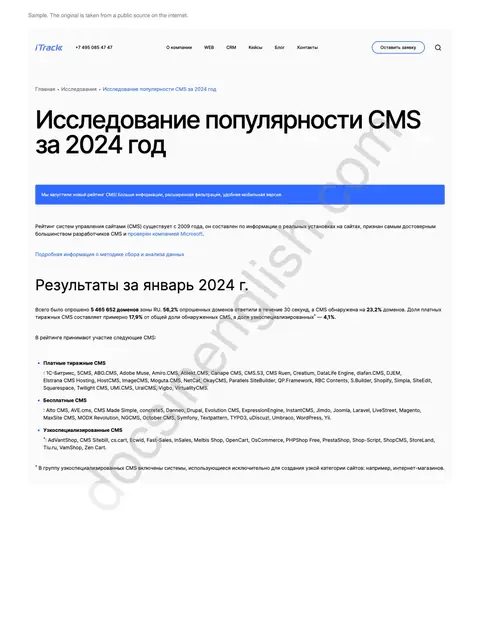 Industry rating with a chart and a table (Russian)Open, 4 pages
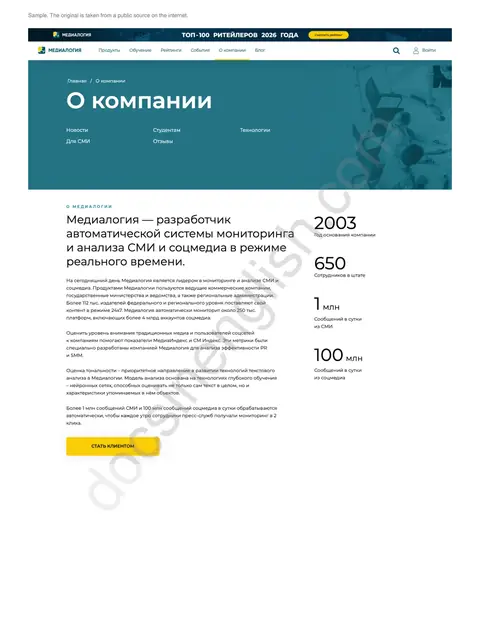 Company “About us” page (Russian)Open, 4 pages
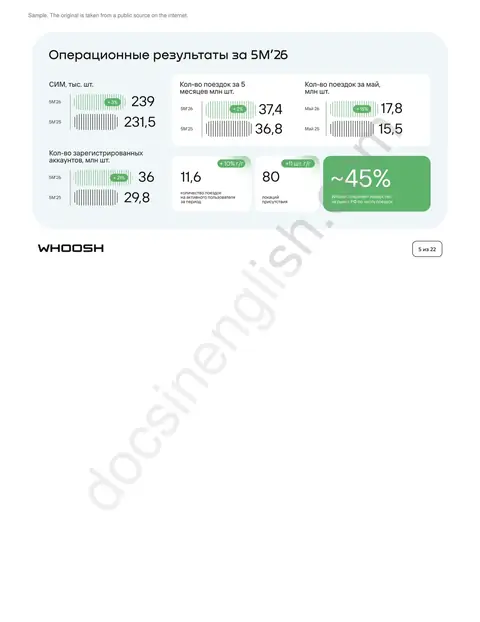 Company presentation with charts (Russian)Open, 4 pages
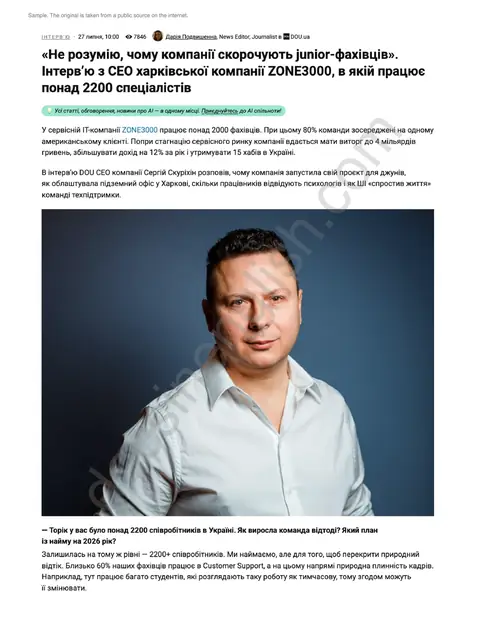 Online interview with comments (Ukrainian)Open, 4 pages
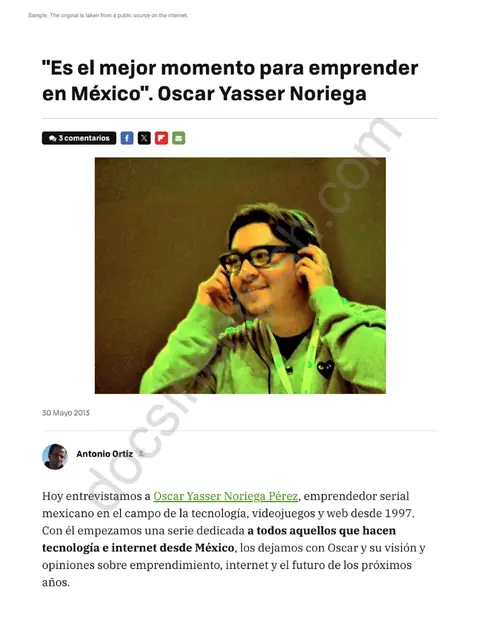 Online interview with comments (Spanish)Open, 4 pages
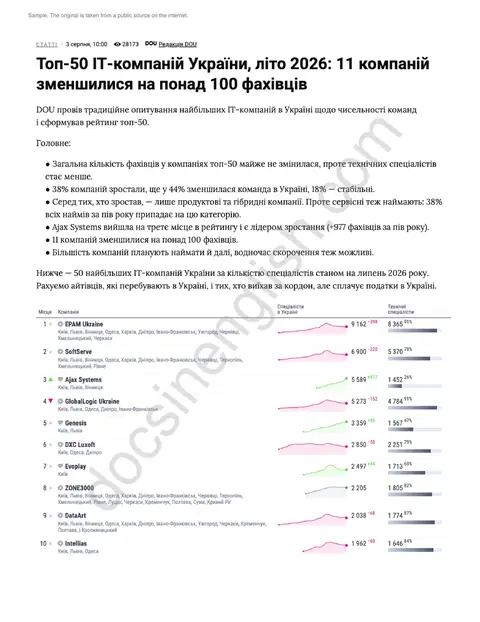 Rating of IT companies with a table and charts (Ukrainian)Open, 5 pages
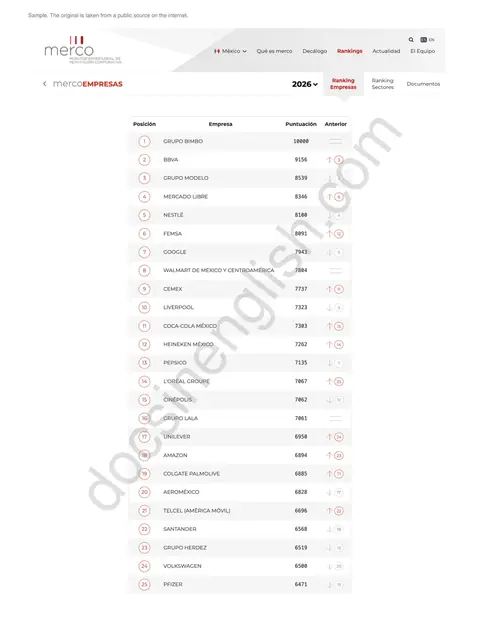 Corporate reputation ranking (Spanish)Open, 3 pages
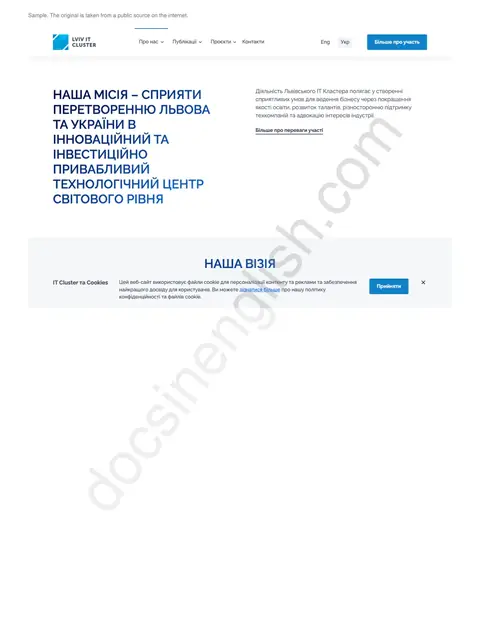 Organization “About us” page (Ukrainian)Open, 4 pages
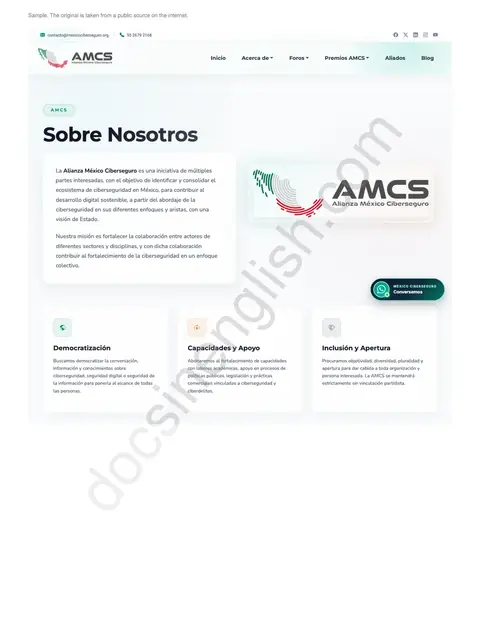 Organization “About us” page (Spanish)Open, 4 pages
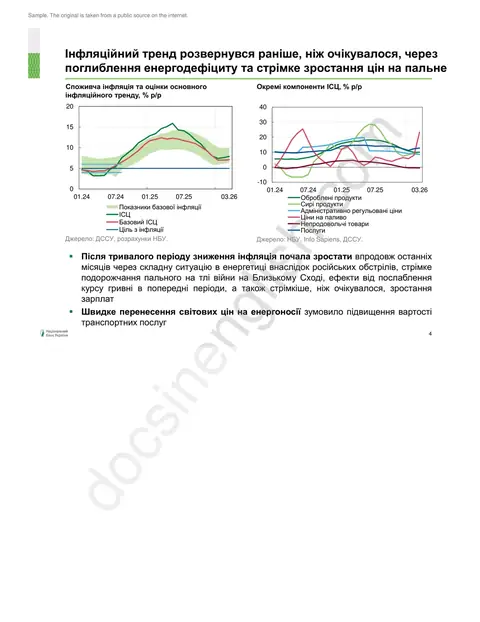 National bank presentation with charts (Ukrainian)Open, 5 pages
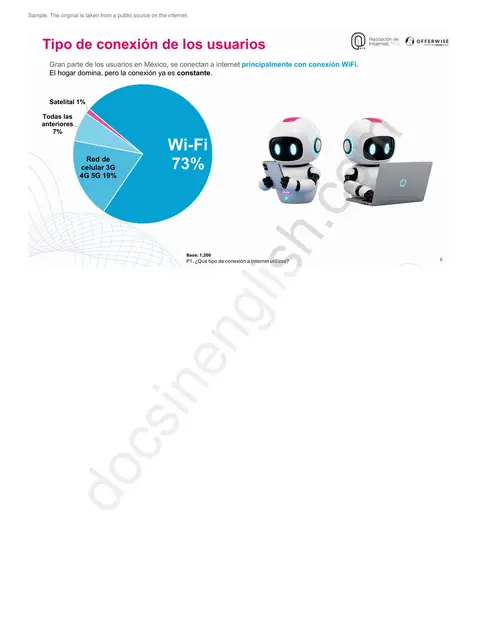 Survey presentation with charts (Spanish)Open, 4 pages
Questions
How much does it cost?
We charge by the page: $25 for the first page and $20 for each additional one. The total depends on how long the publications are. Send screenshots or a PDF, and we’ll give you the exact price.
Do you translate the comments and charts too?
Yes. The translation is complete: the text, the captions, the comments and the values in charts and tables. What goes into the screenshots is for you or your attorney to decide, and we translate everything on them.
Do I need a notary?
USCIS rules don’t require one: they ask for the translator’s signed certificate, and it’s included.
How long does it take?
1–4 documents: within 24 hours after payment; faster, within 12 hours (+$15 a page) or 3 hours (+$30 a page, paid between 8 am and 6 pm Pacific time). For 5 or more, we give you the date with the quote.
Will USCIS accept the translation?
No one can promise that an agency will accept a document. We follow its rules to the letter, and if an agency raises an issue with our translation, we fix it for free.
How we do it
- Full translation
every stamp, signature and handwritten line
- Signed certificate
with the translator’s name, address and phone
- A PDF, ready to file
original, translation and certificate, translation pages numbered
- Price
$25 for the first page up to 250 words, $20 for each additional page, in the same document or another one.
- Turnaround
1–4 documents: within 24 hours after payment; faster, within 12 hours (+$15 a page) or 3 hours (+$30 a page, paid between 8 am and 6 pm Pacific time). For 5 or more, we give you the date with the quote.
This is a summary of what the agency publishes, not legal advice.